A 'Swenglish' journey through family photos, notes and postcards
from the early 20th century.
Showing posts with label statue. Show all posts

2023-09-23

Warrior Kings and Salvation Army - Sepia Saturday 691

 G.005.1 - Postcard previously posted on this blog 2012-04-20


005.1A-1
Karl XII:s staty. Stockholm. - Förlag Oscar Ellqvist, Nr 9.
(Statue of King Charles XII of Sweden.)

005.1A-003

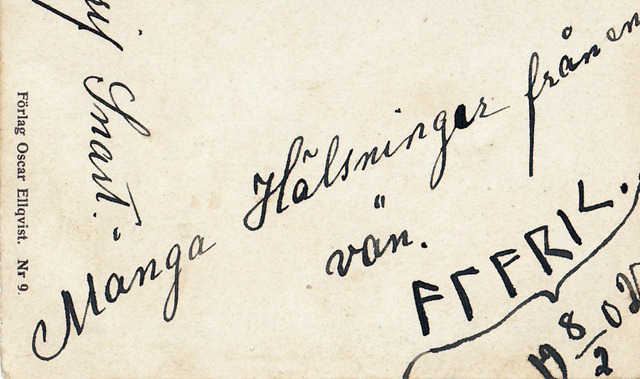
Tack för kortet! Skrif Snart! 
Många Hälsningar från en vän - ALARIK
Thanks for the card! Write soon!
Many Greetings from a friend – ALARIK

005.1B-1 
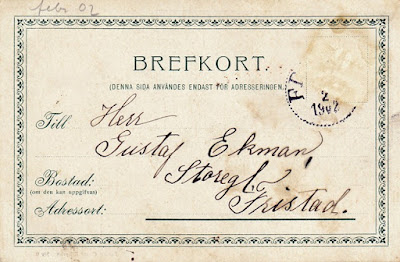
 8.2.1902
To: Herr Gustaf Ekman, Storegd, Fristad

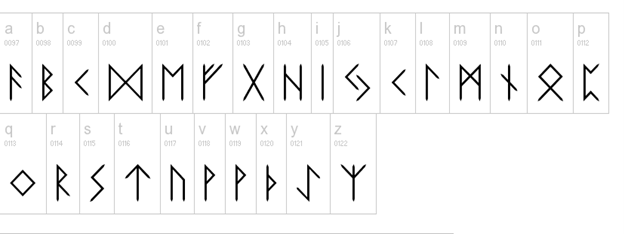
Some of Gustaf's friends back in the early 1900s seem to have enjoyed sending him anonymous and/or cryptic postcard messages. (I suppose he probably did the same to them.) This postcard from Stockholm is signed using the old runic alphabet: 


Runes are very old letters which Germanic people used before they started using Latin letters in the Middle Ages. In its broadest sense, the word runes can mean any cryptic letters, but it usually means the alphabets used by Scandinavian people from about the year 150 AD to the Middle Ages. The oldest of these is called the Elder Fuþark, used from about 150 to 800 AD.

Interest in runes and Old Norse mythology etc had a sort of renaissance here for a while back in the so-called "Romantic Nationalism" of the 19th and early 20th century.

So the name of the friend who sent the card seems to be Alarik. It is an old masculine Germanic name meaning "ruler of all" Whether this was his real name or not, I don't know. But the name Alarik was added to (i.e. given a "name day" in) the Swedish almanac in 1901. (It is still included - 5 August - but I don't think there are a lot of Alariks around in our time. Names do tend to "come and go", though...) 

One famous Alarik in history was Alaric I, king of the Visigoths from 395 to 410 - said to be the first Barbarian ruler to invade Italy. He was a professed Christian and was also seen by some Christians as God's wrath upon a still pagan Rome.

005.1A-002 

The statue on this postcard is of the Swedish king Karl XII (1682-1718), in Swedish history often called the Warrior King. The statue in Stockholm shown on the postcard was made by Johan Peter Molin (1814-73). It's cast in bronze and weighs 2½ tons.

Modern photo from Wikipedia

005.1A-004

The young women in the foreground on the old postcard are female Salvation Army soldiers, dressed in typical hats, and carrying guitars and and leaflets. 

It's one of those street views which may seem ordinary at first glance - just a statue and some random people - but which could just as well be used to convey a hidden message... To me there seems to be a certain irony in the fact that the women soldiers here are turning their back on the old warrior king, and are walking in the opposite direction to where he is pointing!

The Salvation Army, founded 1865 in London, was introduced in Sweden in 1882 by Hanna Ouchterlony. (Wikipedia) She was born in Värnamo, Sweden, in 1838. From 1857 to 1864 she served as housekeeper with relatives in Stockholm; then opened a book shop in Värnamo. In the 1870s, she had a religious crisis, and became active within Christian social work. In 1878, she got acquainted with Bramwell Booth (son of William Booth, the founder of the Salvation Army) who was visiting Värnamo for recreation. She became identified with the values of the Salvation Army, and Booth considered her suitable to introduce the movement to Sweden. Between 1878 and 1881, she took correspondence courses from the Salvation Army; and in 1881, she visited London, staying in the home of Catherine and William Booth. She became an officer of the Salvation Army in London 28 November 1882; and upon her return to Sweden, introduced the movement here. 

Hanna served as chief of the Swedish Salvation Army from 1882 until 1892. In 1887–1888, she also founded the Norwegian Salvation Army. She travelled for the Salvation Army in the United States in 1892 and was the territorial leader of the movement between 1894 and 1900. She retired in 1904 and died in Stockholm in 1924.

Linking to Sepia Saturday 691 - On the Street


2019-06-16

G.027.1 - Schiller Monument, Lincoln Park, Chicago (1904)


To: Gustaf Ekman, Galeton, PA
From: Gerda, Chicago, 1904 (June or July 28 ?)

Käre broder! Mycken tack för brefvet. Jag skall bara sända några rader för ro skull o tala om att jag mår bra. Jag skall snart skrifva mer. Kära hälsningar från Gerda

Dear brother, Many thanks for the letter. I'm just sending a few lines for no special reason to let you know I'm well. I'll write more soon. Love from Gerda

The Schiller Monument in Lincoln Park, Chicago, was installed in 1886. It is a recast from the original sculpture by Ernst Rau in Marbach, Schiller's birthplace in southwest Germany. The statue in Chicago is an example of donations made by immigrant groups to honor important figures from their homeland. Schiller's poem ”Ode to Joy” was used for the chorale finale of Beethoven's Ninth Symphony.

2019-06-11

G.026.1–La Salle Monument, Lincoln Park, Chicago (1904)


La Salle Monument, Lincoln Park, Chicago


To: Mr Gustaf Ekman, Galeton Box 113, Potter Co., PA
From: Gerda, Chicago
Arrived: Galeton, April 3, 8 AM, 1904


Mycken tack för brefvet och vykort som jag fick Gerda-dagen [23 mars]. Jag skall snart skrifva, jag skall snart skrifva bref och så får jag önska dig en Glad Påsk önskar Gerda / och många påskägg. / Tycker du ej här är vackert? Kommer du ej hit snart, jag bor nära denna parken.


Many thanks for the letter and the postcard I got for the Gerda day [Swedish name-day, March 23]. I will soon write, I will soon write a letter, and I wish you a Happy Easter, from Gerda / and many Easter eggs / Don’t you think this place is beautiful? Won’t you come here soon, I live close to this park.


La Salle Monument, Chicago
By Count Jacques de La Laing, 1889
Robert Cavelier, Sieur de La Salle (1643-1687): 17th century French explorer and fur trader in North America who explored the Great Lakes region, the Mississippi River, and the Gulf of Mexico. Sculpture installed in Lincoln Park 1889; moved in the mid-1920s, and again in the 1990s. (Which means this postcard shows its original position.)

Read more: Chicago Public Art

2012-04-20

G.005-1 Salvation Army, Stockholm (1902)

G.005-1 Krigarkonungen och Frälsningsarmén
      The Warrior King and the Salvation Army


005.1A-1

Karl XII:s staty. Stockholm.
Förlag Oscar Ellqvist. Nr 9

005.1B-1

005.1A-003

005.1A-002

005.1A-004

Datum/date: 8.2.1902
Till/to: Herr Gustaf Ekman, Storeg, Fristad

Tack för kortet! Skrif Snart!
Många Hälsningar från en vän.
ALARIK

Gustafs vänner tycks verkligen ha haft en förkärlek för att skicka anonyma och kryptiska vykortshälsningar. Det här vykortet från Stockholm är signerat med runskrift!1 Jag tyder namnet till Alarik – men hade han verkligen en vän som hette så, eller var det i sin tur ett smeknamn eller kodnamn??

Alarik är ett gammalt nordiskt namn med betydelsen 'allhärskare, den som härskar över allt'.

Namnet fick en viss popularitet när det infördes i almanackan 1901.

Alarik I (alternativt Alarik goten eller i latinska källor Alaricus), (cirka 370 - 410), var en gotisk kung och den förste barbarhärskaren som intog Rom.

Motivet på vykortet är Karl XII:s staty i Stockholm.2 
I förgrunden t.v. en grupp unga kvinnor. När man tittar närmare, så är det inte vilka kvinnor som helst – de bär på gitarrer och papper, och har hattar typiska för Frälsningsarmén!

Frälsningsarmén grundades 1865 i London och kom till Sverige 1882 under ledning av Hanna Ouchterlony.

image
1882; Hanna Ouchterlony, som hört William Booths son Bramwell predika i väntsalen i stationshuset i Värnamo, och snabbutbildats till frälsningsofficer i England kommer till Stockholm i december 1882 i spetsen för en liten grupp på fem personer. Den 28 december hålls Frälsningsarméns första möte på dåvarande Ladugårdslandsteatern (sedermera Folkan) vid Östermalmstorg och Frälsningsarmén hade därmed ”öppnat eld” i Sverige.

Statyn som föreställer Karl XII är modellerad av Johan Peter Molin (1814-73) och göts på Kungliga Myntet på Kungsholmen av Heroldt från Nürnberg i två omgångar. Bronsen väger två och ett halvt ton.

Karl XII (1682-1718) har kallats krigarkonung och hjältekonung. Det förefaller mig som det ligger en viss ironi i fotografiet av de kvinnliga frälsningssoldaterna som vänder ryggen åt den gamle krigarkonungen (representant för den världsliga makten) och går i en annan riktning än den som statyn pekar ut.

Ännu en vykortsbild som vid första anblicken inte verkar alls märkvärdig – en staty och lite folk – men i själva verket är en mycket skickligt fångad bild; och möjligen också ett mycket medvetet val av bild från avsändarens sida.


In English

Thanks for the card! Write soon!
Many Greetings from a friend – ALARIK

Gustaf’s friends certainly seemed to enjoy sending him anonymous and cryptic messages. This postcard from Stockholm is signed using runes! 1


image

1 Runes are very old letters which Germanic people used before they started using Latin letters in the Middle Ages. In its broadest sense, the word runes can mean any cryptic letters, but it usually means the alphabets used by Scandinavian people from about the year 150 AD to the Middle Ages. The oldest of these is called the Elder Fuþark, used from about 150 to 800 AD.
The runes used here seem to be from the Elder Fuþark and would read ALARIK.
Alaric is an old Nordic/German name meaning Ruler of all. Alaric I was the Gothic king of the Visigoths who plundered Rome in AD 410.

It is/was not a very common name but I found a note that it was introduced in the Swedish namesday calendar in 1901 (i.e. the year before this postcard was sent) and in connection with that gained a certain popularity.


So did Gustaf really have a friend by the name of Alarik? Or was it a nickname, or a code name?

Looking closer at the picture on the card, in the background there is a famous statue of the Swedish king Charles XII of Sweden (1682-1718), who was often referred to as warrior king and hero. 2 


image

Part of the Monument to Charles XII
in Stockholm, pointing towards Russia
(from Wikipedia)

In the foreground of the picture, there is a group of women. When you look closer, you can see they are carrying guitars and books or papers, and wearing hats typical of the Salvation Army!

The Salvation Army was founded in London in 1865 by William Booth and his wife Catherine. In 1878, their son Bramwell Booth, age 22, was visiting a family in Värnamo, Sweden. He took the opportunity to preach at the railway station there. One of those who heard him was a woman named Hanna Ouchterlony, a 40 year old bookshop assistant. She ended up going to London a few years later to study the work of the Salvation Army there; and returned to Sweden in 1882 with a group of four people, founding the first branch of the Salvation Army in Stockholm.

When looking close at this postcard, it seems to me to hold a wonderful irony, in that the Salvation Army women are turning their backs on the old warrior king, representing worldly wars and power, and walking in the opposite direction.

All in all, this to me turns out another example of a picture postcard that at first sight seemed rather ordinary – a statue and some people – but which on analysis turns out to be a really clever photo; and possibly also very consciously chosen by Gustav’s friend “Alarik”.