A 'Swenglish' journey through family photos, notes and postcards
from the early 20th century.
Showing posts with label sender unknown. Show all posts

2023-10-07

Mysterious Girl with Moustache - Sepia Saturday 693

The Sepia Saturday October theme of Portraits gives me an opportunity to repeat another early post from this blog, with an old postcard that I still find very intriguing.

G.001-3 – Girl with Moustache 
Previously posted on this blog 2012-02-17


A postcard sent to Gustaf at Odensberg in 1901, while he was staying with his brother Oscar. (Cf. my post for SS 690. Before he emigrated to America in 1902, Gustaf seems to have alternated between staying with his father at his farm, vs with his brother who was running a country store at Odensberg.)

The postmark PKXP indicates a railway line and a locality along that line. In the early days, post was sorted aboard the trains.
 
The second printed line on the back of the card (Bostad - om den kan uppgifvas)  indicates that this space is set aside for the recipient's residential address – “if it can be given". Most people probably had to collect their post at the nearest post office, railway station or village shop.


The message is rather mysterious. Besides the moustache and beard added to the image, the message is written in incomplete sentences and using abbreviations ("text message" style of 100 years ago?). The last sentence is also written upside-down; and the sender is anonymous. But this is how I read it:

"Undrar hur Ni befinner Er. Hoppas inte som - hjärtligt tack därför i alla fall - i för. vk. [= i förra veckan] Jag har f.n. tandvärk o är mycket retlig."

“I wonder how you are. Hope not like  - many thanks for that anyway -  last week. I am currently having a toothache, and am very irritable.”  

My guess is that sender and receiver had been "up to something" together the week before, which probably made the message easier to interpret for Gustaf than it is for us, 120+ years later.

The sender has also given the young lady in the picture an ink moustache and beard - in the same way one sometimes sees it done to Da Vinci’s Mona Lisa. 

The remarkable thing is that when I checked, I found that the most famous parody of Mona Lisa with moustache and beard (L.H.O.O.Q by Marcel Duchamp) was not made until 1919. But this postcard was sent in 1901... 

I also noticed one more thing on "my" postcard: An ink line drawn across one of the girl's fingers, which makes it look like she's wearing a ring. (It's on her right hand, while an engagement ring would normally be worn on the left hand - but still...) 

If anyone has come across similar parody images from before 1919, I'd be interested to learn about it!

Linking to Sepia Saturday 693 - Portraits


2012-04-25

R.002-02 Glad Påsk / Happy Easter

Gerda_0004A-01

“Look”

Gerda_0004B-01

Postmark: (Sörby?) 30.3.1902

To: Miss Gerda Ekman, Wilander, Sörby

En glad och treflig påsk!
Hjärtliga hälsningar (B. F-n)

(B. Fredriksson? Jämför nyårshälsningen R.001-01)

…

In English

A happy and enjoyable Easter!
Best regards, (B. F-n)

I think the sender here may be the same friend who sent the R.001-01 card with the New Year greeting. (B. Fredriksson)

2012-04-20

G.005-1 Salvation Army, Stockholm (1902)

G.005-1 Krigarkonungen och Frälsningsarmén
      The Warrior King and the Salvation Army


005.1A-1

Karl XII:s staty. Stockholm.
Förlag Oscar Ellqvist. Nr 9

005.1B-1

005.1A-003

005.1A-002

005.1A-004

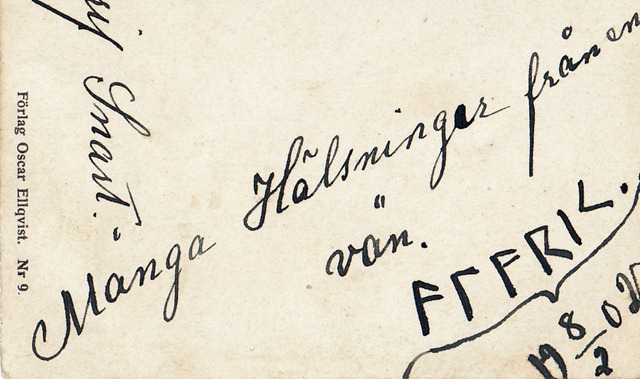
Datum/date: 8.2.1902
Till/to: Herr Gustaf Ekman, Storeg, Fristad

Tack för kortet! Skrif Snart!
Många Hälsningar från en vän.
ALARIK

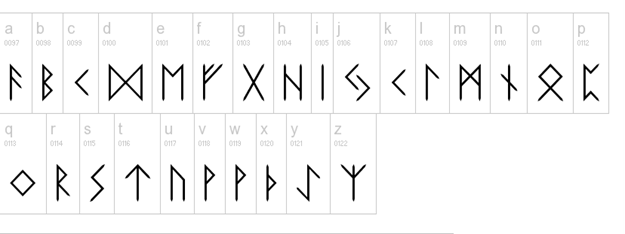
Gustafs vänner tycks verkligen ha haft en förkärlek för att skicka anonyma och kryptiska vykortshälsningar. Det här vykortet från Stockholm är signerat med runskrift!1 Jag tyder namnet till Alarik – men hade han verkligen en vän som hette så, eller var det i sin tur ett smeknamn eller kodnamn??

Alarik är ett gammalt nordiskt namn med betydelsen 'allhärskare, den som härskar över allt'.

Namnet fick en viss popularitet när det infördes i almanackan 1901.

Alarik I (alternativt Alarik goten eller i latinska källor Alaricus), (cirka 370 - 410), var en gotisk kung och den förste barbarhärskaren som intog Rom.

Motivet på vykortet är Karl XII:s staty i Stockholm.2 
I förgrunden t.v. en grupp unga kvinnor. När man tittar närmare, så är det inte vilka kvinnor som helst – de bär på gitarrer och papper, och har hattar typiska för Frälsningsarmén!

Frälsningsarmén grundades 1865 i London och kom till Sverige 1882 under ledning av Hanna Ouchterlony.

image
1882; Hanna Ouchterlony, som hört William Booths son Bramwell predika i väntsalen i stationshuset i Värnamo, och snabbutbildats till frälsningsofficer i England kommer till Stockholm i december 1882 i spetsen för en liten grupp på fem personer. Den 28 december hålls Frälsningsarméns första möte på dåvarande Ladugårdslandsteatern (sedermera Folkan) vid Östermalmstorg och Frälsningsarmén hade därmed ”öppnat eld” i Sverige.

Statyn som föreställer Karl XII är modellerad av Johan Peter Molin (1814-73) och göts på Kungliga Myntet på Kungsholmen av Heroldt från Nürnberg i två omgångar. Bronsen väger två och ett halvt ton.

Karl XII (1682-1718) har kallats krigarkonung och hjältekonung. Det förefaller mig som det ligger en viss ironi i fotografiet av de kvinnliga frälsningssoldaterna som vänder ryggen åt den gamle krigarkonungen (representant för den världsliga makten) och går i en annan riktning än den som statyn pekar ut.

Ännu en vykortsbild som vid första anblicken inte verkar alls märkvärdig – en staty och lite folk – men i själva verket är en mycket skickligt fångad bild; och möjligen också ett mycket medvetet val av bild från avsändarens sida.


…


In English

Thanks for the card! Write soon!
Many Greetings from a friend – ALARIK

Gustaf’s friends certainly seemed to enjoy sending him anonymous and cryptic messages. This postcard from Stockholm is signed using runes! 1


image

1 Runes are very old letters which Germanic people used before they started using Latin letters in the Middle Ages. In its broadest sense, the word runes can mean any cryptic letters, but it usually means the alphabets used by Scandinavian people from about the year 150 AD to the Middle Ages. The oldest of these is called the Elder Fuþark, used from about 150 to 800 AD.
The runes used here seem to be from the Elder Fuþark and would read ALARIK.
Alaric is an old Nordic/German name meaning Ruler of all. Alaric I was the Gothic king of the Visigoths who plundered Rome in AD 410.

It is/was not a very common name but I found a note that it was introduced in the Swedish namesday calendar in 1901 (i.e. the year before this postcard was sent) and in connection with that gained a certain popularity.


So did Gustaf really have a friend by the name of Alarik? Or was it a nickname, or a code name?

Looking closer at the picture on the card, in the background there is a famous statue of the Swedish king Charles XII of Sweden (1682-1718), who was often referred to as warrior king and hero. 2 


image

Part of the Monument to Charles XII
in Stockholm, pointing towards Russia
(from Wikipedia)

In the foreground of the picture, there is a group of women. When you look closer, you can see they are carrying guitars and books or papers, and wearing hats typical of the Salvation Army!

The Salvation Army was founded in London in 1865 by William Booth and his wife Catherine. In 1878, their son Bramwell Booth, age 22, was visiting a family in Värnamo, Sweden. He took the opportunity to preach at the railway station there. One of those who heard him was a woman named Hanna Ouchterlony, a 40 year old bookshop assistant. She ended up going to London a few years later to study the work of the Salvation Army there; and returned to Sweden in 1882 with a group of four people, founding the first branch of the Salvation Army in Stockholm.

When looking close at this postcard, it seems to me to hold a wonderful irony, in that the Salvation Army women are turning their backs on the old warrior king, representing worldly wars and power, and walking in the opposite direction.

All in all, this to me turns out another example of a picture postcard that at first sight seemed rather ordinary – a statue and some people – but which on analysis turns out to be a really clever photo; and possibly also very consciously chosen by Gustav’s friend “Alarik”.

2012-03-12

G.004-3 Sundsvall, Vängåvan (1902)

004.3A-2

Sundsvall – Vängåfvan1
W. Ahlströms Bok. - A.E.

004.3B-2

Poststämplar: Sundsvall + Odensberg 19.1.1902
Till/to: H. Gustaf Ekman, Odensberg
Retur/forwarded to: Storeg. Fristdad

(Sundsvall) 15/1 –02.
Ett hjärtligt tack för det så stiliga vykortet. Jag kan ej på långt när sända er så förtjusande vy tillbaka, det fins ej i hela Sundsvall. Sänder härmed en vy af Storgatan. har lust fortsätta om så önskas svar förgät mig ej.

Det verkar som om många föredrog att sända sina hälsningar anonymt till den unge Gustaf! Av handstilen att döma tror jag inte det är samma avsändare som föregående. Ytterligare någon han gjort bekantskap med under tiden i Odensberg? som var från, eller flyttat till, Sundsvall? Noterar att tilltalet “er” används, vilket väl tyder på en nyligen inledd bekantskap. Jag gissar också av ordvalet att det är kvinnlig skribent.

1  Vängåvan är en park med fontän som anlades i slutet av 1800-talet, en av de första platserna med offentlig utsmyckning i Sverige. Området skänktes till staden som donation från två privatpersoner.


In English

Sundsvall 15/1 –02.
Thank you so much for the handsome picture postcard. I cannot possibly send you an equally charming view back because there is none to be seen in all of Sundsvall. I’m sending you a view of the Main Street. Wish to continue, if so looking forward to reply,  forget me not.

Another postcard not signed by name. My guess from the way this message is worded in the original language is that the sender is a young woman, and a recent acquaintance rather than an old friend, since she addresses him formally (Swedish ni/er corresponds to French vous, or German Sie/Ihnen). Obviously this is a reply to a postcard sent by him to her. The last sentence is somewhat cryptical because of lack of punctuation in the original. Seems to me that this could be intentional (half leaving it up to the recipient how much to read into it).

Because the card is addressed to Gustaf at Odensberg (but forwarded from there to Fristad) my guess is that this too is someone he met during his stay at Odensberg in December.

Sundsvall is a very long way from Odensberg/Falköping, though. About 665 km north. 

1 The park with the fountain seen on this postcard was founded in the 1870’s and was one of the first public places of its kind in Sweden; donated to the town by two landowners. The name of the park – Vängåvan  – means ‘the friendship gift’. (That word/ name is printed below the picture to the right.)

2012-03-10

G.004-2 Hällestad kyrka (1901)

004.2A-1

Hällestad kyrka. – Church at Hällestad, Floby, Västergötland.

004.2B-1

Poststämpel/postmark: Sörby (30.12) 1901
Till/to: Herr Gust. Emanuelsson, Storegården, Fristad

Godt nytt år! Tillönskar --- a.
Happy New Year! (Best wishes) --- a.

En anonym nyårshälsning sänd till Gustaf under efternamnet Emanuelsson, från Sörby (Floby). Hans äldre syster Emma med familj bodde i Sörby, och troligen vid denna tid med dem även systern Gerda. Men varför skulle Emma eller Gerda inte signera med fullt namn? Dessutom framgår av andra kort från den här tiden att Gustaf (liksom Oscar och Gerda) använde efternamnet Ekman, vilket syskonen måste veta. 

Tar fantasin till hjälp och tänker, att Gustav under vistelsen hos Oscar i Odensberg, i samband med julen, säkert även varit och hälsat på systern/systrarna i Sörby (inte långt därifrån); och gjort bekantskap  någon flicka…

Vad gäller Hällestad kyrka, får jag återigen en ‘tankeställare’ när jag slår upp den i Wikipedia och finner att den byggdes 1901, dvs samma år som vykortet skickades. Så återigen, det som i mina ögon är en gammal kyrka/byggnad – var då splitter ny.

Också möjligt att några av dem kan ha besökt t.ex. julottan i Hällestads kyrka julen 1901. Hällestad ligger ca 1 mil från Sörby. (Hur troligt det är med tanke på deras frikyrkliga bakgrund är en annan fråga - fadern Samuel var ju med om att grunda en missionsförsamling på 1880-talet).

Hällestads kyrka är en kyrka i Hällestad i Floby församling i Skara stift. Kyrkan byggdes av trä 1901 och ersatte en träkyrka från 1600-talet. När 1600-talskyrkan revs fann man ekplankor från en medeltida stavkyrka. --- Kyrktornet är försedd med två kyrkklockor. Storklockan är från 1863 och lillklockan är från 1854. (Wikipedia)

 image´
Nutida bild på Hällestads kyrka (Wikipedia)

In English

Looking up this church in Swedish Wikipedia, I find that it is a wooden church built in 1901, i.e. the same year that the postcard above was sent. It replaced an older 17th century wooden church; and when tearing that one down, they also found some old oak planks from the original medieval church underneath.

Again I have to twist my own time perspective around and realize that when this postcard was sent, it was not a picture of an “old church” but of a brand new one.

The card was sent as anonymous New Year greeting to Gustaf. The postmark says it was sent from Sörby, which is where his older sister Emma and her family lived, and probably with them at this time also his sister Gerda. But why would any of his sisters not write out their name?

Moreover, the card is addressed to Gustaf Emanuelsson rather than Gustaf Ekman, which is the surname he (as well as Oscar and Gerda) was using at this time. His sisters would know that. So I let my imagination run away with me a little, thinking that while staying with Oscar over Christmas (cf. the previous card), he may also have visited the sisters in Sörby (which is quite close to Odensberg); and there met some girl who took a liking to him.

It is also possible that some or all of them may have visited the new church at Hällestad at Christmas. The distance from Sörby is about 10 km.

2012-02-25

G.003-1 Mösseberg, Falköping (1901)

003.1A-1

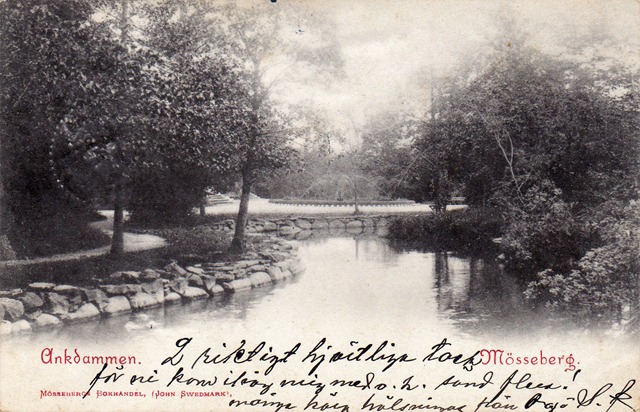
Ankdammen, Mösseberg (Falköping)/ Duck pond, Mösseberg

Mössebergs Bokhandel, (John Swedmark)
Oscar E. Kulls Grafiska Anst, Malmö - 202

003.1B-1

Till/to: Herr Gustaf Ekman, Storeg., Fristad
Från/from: (oläsligt/illegible)
Poststämpel/Postmark: 6(?).10.1901

(Poststämpeln har gjort avtryck i pappret och är därmed halvt läslig trots att frimärket är avlägsnat.)

2 riktigt hjärtliga tack för ni kom ihåg mig med v.h. Sänd flera! Många kära hälsningar från (…?…)

Jag kan inte tyda namnteckningen.

Från http://www.kurortenmosseberg.se/historik/ hämtar jag information som nedan återges något förkortad.

1746 genomförde Carl von Linné sin västgötska resa och kom en blåsig julidag till Falköping. Han studerade floran på såväl Mösseberg som Ålleberg och förundrades över den växlingsrika naturen. Det skulle dock dröja ytterligare ett sekel innan den viktigaste komponenten för en framtida kurort skulle läggas på plats – dragningen av Västra Stambanan.

Greve Gösta Posse, en av initiativtagarna till järnvägens etablering på Falbygden, undersökte traktens möjligheter för en lokalisering av en vattenkurort och Mösseberg valdes då vattnet visade sig vara “särdeles ymnigt” i S:t Eriks källa. Vattnet kunde lätt pumpas upp och komma en kurbadinrättning till godo. En annan god anledning var att Mössebergssluttningen ansågs naturskön med en vegetation av ädellövskog och mattor av vår- och sommarblomster. Efter en studieresa till franska och tyska badinrättningar lades ritningar och förslag fram till byggnation på Mössebergssluttningen.

Den 30 augusti 1864 fick projektet Kungl. Maj:ts godkännande för bolagsordningen för Mössebergs Kallvattenkurinrättning Aktiebolag, en benämning som senare ändrades till Mössebergs Vattenkuranstalts Aktiebolag.

År 1867 tillträdde dr Otto Torstensson, den förste badläkaren vid Mösseberg, i ”den ståtligaste och vackraste badanstalt som detta land dittills skådat”.

I Ny Illustrerad Tidning kunde man samma år läsa följande: “Några minuters väg från Falköpings jernvägsstation å den södra sluttningen av det egendomliga Mösseberg, der bokskog ännu påminner om flydda dagars skogrikhet, framqväller en källa, kring vilken den nya badanstalten blifvit uppförd i smakfull stil. Inredningen är efter nyaste och bästa mönster.”

Det vackraste badhuset i Sverige blev endast fyra år gammalt. I slutet av badsäsongen, natten mellan den 5 och den 6 september 1871, eldhärjades denna stora träbyggnad. Badsäsongen var egentligen slut, inga gäster fanns kvar i byggnaden men tre badbetjänter innebrändes. Anläggningen ödelades helt.

Redan ett år senare uppfördes ett nytt badhus på samma grund som det eldhärjade. Gästerna som mot slutet av 1800-talet till stor del bestod av lungsjuka, ersattes med de som återigen såg kurortslivet som en tillvaro för de mer bemedlade – samhällets toppskikt.

Med sekelskiftet byggdes kurorten till ytterligare. Den 14 november 1907 invigde prins Gustaf Adolf Vintersanatoriet som förutom gästrummen hade en sällskapsvåning med magnifika salonger i svit, rökrum, biljardsal, matsal samt fullständig badavdelning, kök och en stor ekonomiavdelning i en souterrängvåning. Tidens finesser fanns här som elektriskt ljus, centralvärme och vattenklosetter.

År 1901 verkar det troligt att Mösseberg fortfarande huvudsakligen var en kurort för lungsjuka snarare än en “semesteranläggning”.

Jag vistades själv på Mösseberg i två veckor i januari 2003 för en rehabiliteringsutredning, och då såg ankdammen ut så här:

19##_F21

Duck pond, Mösseberg, Falköping, January 2003 (my photo)

In English:

2 really heartfelt thanks for remembering me with friendly greetings. Send more! ‘Lots of love’ from (…?…)

(It strikes me that in translating greeting phrases it’s not easy to be sure that one catches the right level of initimacy. Especially not from 110 years ago!)

I can’t decipher the signature on this postcard.

Mösseberg was and is a spa resort in Falköping. The history page on their (Swedish) website tells me that the spa resort was founded in the mid-1860’s in connection with the railway being built.

[I think my blogging friend GB pinpointed Falköping very well with the following comment on a previous post here: “Between Google Earth and Wikipedia it's interesting to build up a picture of the locality of the sender and the recipient. Falköping looks very much like a road and rail hub despite not being a very large place.”]

Besides beautiful nature in the surroundings there was a spring well suited for a health spa. When it was first opened in 1867, it was described as the most beautiful and luxurious of its kind in our country. Unfortunately, the original building was destroyed in a fire only four years later; but a new building was erected the following year, on the same foundation as the old one.

In 1907 there was a major renovation and additional buildings with the latest facilities were added, and it became more of a fashionable resort for nobility and royalty and other people with a lot of money to spend. In 1901, however, it was probably still mainly a resort for people suffering from consumptive diseases.

So the friend who received friendly greetings and sent thanks back for them may have been someone spending time at Mösseberg spa for that reason. On the other hand, it could of course have been someone visiting or living in or near Falköping for other reasons.  For example, it seems from the two next postcards in the album (coming up here soon), that Gustav’s brother Oscar lived at Odensberg near Falköping. But this seems not to be his signature (comparing with those other two). 

In January 2003, I spent two weeks at Mösseberg myself, in connection with an evaluation of my capacity for work after an accident. Not going into the details of that here (it was not a happy time) but one of the few photos I took while there was one of the duck pond, from the same perspective as that old postcard. It was a very cold January, as I recall around -20°C.

2012-02-22

G.002-3 Skara, Water Tower, 1901

G.002.3  Skara, Vattentornet, 1901

002.3A-1

Förstoring från vykortet nedan. /Photo enlarged from the postcard below.

002.3A-1

Skara, Vattentornet / Skara, the Water Tower (1901)
A Granqvist & Co Skara

002.3B-1

Poststämpel/Postmark: Wara 26.9.1901
Till/to: Herr Gustaf Ekman, Storeg., Fristad
Från/from: Axel Jansson

Många hälsningar fr. Axel Jansson.
Many greetings from Axel Jansson.

Tyvärr vet jag ingenting om vem Axel Jansson var. Den enda upplysning kortet ger är att Gustaf i slutet av september 1901 tycks ha befunnit sig på familjens gård Storegården i Fristad. Eller åtminstone att avsändaren trodde det. De två andra korten jag hittills granskat från 1901 var adresserade till Odensberg. Jag hittade en anteckning i pappas pärm som tyder på att brodern Oskar (med familj) år 1901 bott i Odensberg. Det är ju möjligt att Gustaf vistats tidvis där och tidvis på Storegården.

…

Skara i Västergötland är en av Sveriges äldsta städer, och var en tidig kyrklig medelpunkt. Domkyrkan anlades troligen runt år 1000. Nuvarande utseende fick den vid en genomgripande renovering 1886-94.

Skara vattentorn hittar jag på Västergötlands Museums  hemsida, med följande text:

“Skaras vattentorn från 1898 är ett utmärkt exempel på den omsorg och kvalitet som kännetecknade samtidens ”nya” företeelser som elverk, vattenverk och liknande kommunaltekniska anläggningar. En vårdad och påkostad arkitektur bidrog till att orten utstrålade soliditet och framtidstro. Vattentornet ritades av arkitekt Ernst Torulf och är idag skyddat som byggnadsminne.”

image

Det som plötsligt blir intressant med vykortet från 1901 är att när det skickades, så var det inte en bild av ett gammalt vattentorn – utan av ett nytt och modernt sådant, byggt för bara tre år sedan.

…

In English

For once here is a sender of a postcard who writes out his full name – Axel Jansson – but then I don’t know who he is anyway!

The postmark and address indicate that in September 1901, Gustaf was staying at the family farm with his father and stepmother. Other cards from the same year (exact date on those not visible) tell us that part of the time he was at Odensberg (near Falköping). I found a note among my father’s family research papers indicating that the older brother Oscar might have been living at Odensberg in 1901. Perhaps Gustaf lived by turns in both places.

The photo is of a water tower in Skara.

Skara is a small town in Västergötland with a long educational and ecclesiastical history. According to local legend, Skara was founded in AD 988. With the Christianization of Sweden Skara became the seat for the bishop and a religious centre. The cathedral stems from the 11th century. There have been bishops of Skara in an unbroken succession to this day. The cathedral had a major renovation in 1886-94.

From Västergötlands Museum’s website, I found out that the water tower was built in 1898, and is preserved as a notable building because of being typical of its time. Back in those days, they took great pride in the architecture of public buildings like power plants and water works. The lavish exterior was part of creating an atmosphere of stability and belief in the future. The architect of the water tower in Skara was Ernst Torulf.

Reading this information, I was struck by the fact that in 1901, this was not a postcard of an old water tower. It was a postcard of a brand new water tower, built only three years ago.

2012-02-21

G.002-2 Stormy Weather at Varberg

002.2A-1

Varberg: Hamnpiren i storm. / Varberg: The Pier in storm.
Förlag: Vilén & Johanson, Borås1

002.2B-1

Poststämplar/postmarks:
PLK 208 B (=Herrljunga-Varberg) 6.8.1903
Borås 6.8.03 – 2 tur
Porto: 5 öre

Till/to: J.A. Johanson, Lugnet 51, Borås
Från/from: G.J. (?)

Varberg 6/8. Hjärtligt tack för brefkortet. Igår var här en väldig storm. Ganska vackert att se. Mamma behöfver ej vara orolig att vi gå på sjön, ty det är omöjligt. Vi mår eljest ganska bra. Helsn. G.J.

Det här är ett kort som inte verkar passa in i familjehistorien. Varken Gustaf eller Gerda kan vara inblandade, eftersom de 1903 befann sig i Amerika. Till skillnad från de flesta korten i albumet är frimärket kvar. Jag gissar att Gustaf kan ha fått kortet senare av någon som visste att han samlade på kort.

1 En sökning på utgivarnamnet Vilén & Johanson visar att det fortfarande finns ett bolag registrerat med det namnet (i Mölndal), men ej aktivt. Registrerat som aktiebolag 1929 med syfte att “bedriva handel med pappersvaror, emballage och kontorsutensilier jämte därmed förenlig verksamhet”.


In English:

Varberg 6/8 (1903). Heartfelt thanks for the postcard. Yesterday there was quite a storm here. Rather beautiful to behold. Mother does not have to be anxious about us going out on the sea, because that is impossible. Otherwise we are quite well. Greetings G.J.

This is a card that seems to fall outside the family history.  Gustaf probably got it second-hand later in life – perhaps from some friend who knew he collected postcards? In August 1903, both Gustaf and his sister Gerda were in America; and this card seems to have been sent from some G.J. to J.A. Johanson, possibly his/her mother. (I think it was usual in Sweden back then to address your parents “in the third person” rather than using “you”.) The name rings no bells with me.

Johanson is a very common surname or it might have been interesting to note that this is also the name of one of the publishers of the postcard – Vilén & Johanson. The company still exists but is not active.

The postcard shows quite a magnificent picture of stormy weather at the pier in Varberg, though.

Varberg is a town on the west coast in the county of Halland. Varberg and all of Halland are well known for their "typical west coast" sandy beaches. In Varberg the coast changes from wide sandy beaches to rocky terrain that continues north into the Bohuslän archipelago.

Varberg is still a popular summer and spa resort for  people living further inland. It’s reputation as a spa resort was founded in the early/mid 19th century. The railway line between Varberg and Borås was established in 1880. The town has an old fortress from around 1280-1300; now museum + bed and breakfast.

Below are my own photos of the pier and the fortress from 2001. (In not so stormy weather!)

0007

0008

2012-02-19

G.002-1 Motorboats at Westervik

G.002-1 Motorbåtar i Västervik

002.1A-1

002.1B-1

Poststämpel: ?
Till: Herr Gustaf Ekman, Odensberg
Från: M.B---

Spårö sund vid Westervik.
Foto: S. Eriksén, Westervik

Hjärtligt tack för vykortet idag!
Hälsningar många.
Väntar på nästa v.k. [vykort]
M.B---

De där båtarna ser ut att gå fort… måste vara motorbåtar!
När kom motorbåtar i bruk? – Enligt Wikipedia testades den första motorbåten med bensinmotor av Gottlieb Daimler och Wilhelm Maybach i Tyskland 1886.1

Kortet är troligen sänt 1901 eller 1902. Jag har tjuvkikat lite framåt i albumet och det verkar som att Gustav for till Amerika i slutet av 1902, för att inte återvända till Sverige (och då till Storegården i Fristad) förrän 1911. En teori just nu är att Gustaf och Gerda kan ha farit samtidigt till Amerika 1902, fastän de sedan skildes åt vid ankomsten. Gustaf till Pennsylvania, Gerda till Chicago. Mer om det när jag kommer till de kort som utgör bevis för teorin!

Jag har påbörjat en “tidslinje” i marginalen, där jag kan föra in årtal, var Gustaf och Gerda då verkar ha befunnit sig, och ev andra viktiga händelser i familjen. Tidslinjen kan komma att ändras om jag stöter på ytterligare eller motsägelsefulla uppgifter!

- - -

In English:

Postcard to Gustaf from somone with initials M.B.
View from Westervik (
Västervik) on the south east coast.
No postmark to show if it was also sent from there.

Heartfelt thanks for the postcard today! Many greetings. Waiting for the next postcard. M.B---

Those boats look like they’re going fast…
When did motor boats first come into use?
Wikipedia provides the answer:

1 The first boat powered by a petrol engine was tested on the Neckar river by Gottlieb Daimler and Wilhelm Maybach in 1886, when they tested their new "longcase clock" engine. It had been constructed in the former greenhouse (converted into a workshop) in Daimler's back yard. The first public display took place on the Waldsee in Cannstatt, today a suburb of Stuttgart, at the end of that year.
http://en.wikipedia.org/wiki/Motorboat#History

The card was probably sent in 1901 or 1902. I have had a peek into the future and it seems that Gustaf left for America in the autumn of 1902 (not to return until 1911, and then to live on the family farm). It also seems Gerda must have left around that time too. Maybe they even went on the same boat? (I don’t know that for a fact though) but split up at arrival in the new country. Gustaf went to Pennsylvania, Gerda to Chicago, Illinois.

I have started a “Timeline” in the sidebar, where I can enter years, with notes of where Gustaf and Gerda were at various times, and other important events in the family. The timeline might change if I come upon additional or contradictory evidence!

2012-02-17

G.001-3–Girl with Mustache

G.001-3 – Flicka med Mustasch

Sid 1_0005-2

▲ Uppförstorad detalj. Se hela kortet längre ner på sidan.
    
Enlarged detail. See the whole card further down.
     English translation at the bottom of the page.

Sid 1_0006-1

BREFKORT – POSTCARD

Poststämpel/postmark: PKXP N1… (1901? 07?)
Till/to: H Herr Gustaf Ekman, Odensberg2
Från/from: ? 3

John Fredriksons Konstförlag: Christiania

1Jag sökte på PKXP poststämpel, och fann ett PDF-dokument med JÄRNVÄGSLINJER med PKXP/PLK/PKP mellan 1868 och 1968. Tydligen anger dessa stämplar järnvägslinje och ort efter ett visst system.

Jag tycker sista siffran i årtalet antyder en 7:a, men det är antagligen en 1:a – eftersom andra vykort tyder på att Gustav befann sig i Amerika från dec 1902 till sommaren 1911.

2Under den tryckta raden (Bostad) står: “om den kan uppgifvas”.  Jag antar att det tyder på att inte alla på den här tiden hade vad vi idag kallar för en adress; och kanske inte heller fick posten utburen till hemme. Kanske hämtade man posten i närmaste postkontor eller handelsbod?

3Jag undrar om avsändaren av detta kort möjligen är densamme som det förra kortet (1:2). Adressen på det förra är skriven med ledigare stil, men samtidigt har båda mycket sirliga slängar av samma slag på det stora bokstäverna. Vidare finns en kuriös detalj på båda korten: Ett extra ‘H’ före titeln ‘Herr’. Dessutom är båda uppenbarligen sända av någon med skämtlynne.

---

Sid 1_0005-3

Sid 1_0005-4

Meddelandet är svårtytt. Jag läser det som:

Undrar hur Ni befinner Er.
hoppas inte som! hjärtligt tack
därför i alla fall, i för. vk.
[“i förra veckan”?]

Jag har f.n. tandvärk, o är mycket retlig.

Inte som – vad? Inte som jag? Inte som bilden?? Inte som i förra veckan???

Den som sände kortet har också försett den unga damen på bilden med bläck-mustasch och skägg; på samma sätt som man ibland ser med bilder av Da Vincis Mona Lisa. Det anmärkningsvärda, när jag kollar upp data, är att dadaisten/ surrealisten Marcel Duchamps kända parodi av Mona Lisa med mustasch och bockskägg (se nedan) inte gjordes förrän 1919. Men det här vykortet är troligen sänt 1901, och i varje fall inte senare än 1907.

Jag tror att när jag gått igenom den här vykortssamlingen, så får jag ta upp konkurrensen med Dan Brown och skriva en ny DaVinci kod!

T.v.: Duchamps Mona Lisa 1919 4  

image     Sid 1_0005-1

Duchamp’s Mona Lisa parody 4  on the left

In English:

1Postmarks were coded to show railway line and locality along that line.

2The second line on the back of the card indicates that this space is set aside for the residential address – “if it can be given”. My interpretation is that not everyone back in those days had a proper address, or had their mail delivered to the door. Maybe they had to collect their mail at the nearest post office or village shop.

3I’m wondering if possibly the sender of this card is the same as with the previous anonymous card (1:2). The address on the previous one is more casually written, but they both use similar, very elaborate capital letters. And there is another detail that seems curious to me: And extra ‘H’ before the title ‘Herr’ (Mr.) Besides, both cards were obviously sent by someone with a sense of humour.

The message written on the card is rather mysterious. It seems to be written in incomplete sentences and using abbreviations; and no sender. (Text message style of 100 years ago!) This is how I read it: “I wonder how you are. Hope not like ! [me? or the lady on the picture? or last week?] thanks anyway for last week. I am currently having toothache, and am very irritable.” (The last sentence is written upside-down.)

Whoever sent the card has also given the young lady in the picture an ink mustache and beard; in the same way one sometimes sees it done to Da Vinci’s Mona Lisa. The remarkable thing is that when I check facts, I find that the famous parody of Mona Lisa with mustache and goatee by Marcel Duchamp (see below) was not made until 1919; while this postcard  seems to have been sent in 1901, or at least no later than 1907. (The postmark is unclear, but other cards indicate that Gustav was in America between December 1902 and summer 1911.)

I think when I’m done with this card collection, I will take up competition with Dan Brown and write a new Da Vinci code.

4  In 1919, Duchamp made a parody of the Mona Lisa by adorning a cheap reproduction of the painting with a mustache and goatee. To this he added the inscription L.H.O.O.Q., a phonetic game which, when read out loud in French quickly sounds like "Elle a chaud au cul". This can be translated as "She has a hot ass", implying that the woman in the painting is in a state of sexual excitement and availability. It may also have been intended as a Freudian joke, referring to Leonardo da Vinci's alleged homosexuality. Duchamp gave a "loose" translation of L.H.O.O.Q. as "there is fire down below" in a late interview with Arturo Schwarz.

http://en.wikipedia.org/wiki/Marcel_Duchamp

2012-02-16

G.001-2 N.N.

2012_02_16 Sid 12

BREV-KORT / POSTCARD

Poststämpel/postmark: (?)
Till/to: Herr Gustaf Ekman, Odensberg
Från/from: N.N.1

På framsidan står tryckt: N.K.F. Eneret.2
Av baksidan att döma är kortet tryckt i Danmark.

O, hvilken rar
flicka, jag sänder
dig henne att min
hälsning bringa.
fr. v. N.N.

“Oh, what a sweet girl, I send her to bring you my greetings.
From your friend N.N.”

1 N.N. = Nomen nescio (Latin)
Jag känner inte namnet/ I do not know the name
(Jag antar att “v.” står för “vännen”)

2 Eneret betyder ‘patent’ eller ‘monopol’ och indikerar
exklusiv rätt till en design. (Källa: Yahoo! Answers)
Eneret
means ‘patent’ or ‘monopoly’ and indicates
exclusive use of a design. (Source:
Yahoo! Answers)

2012-02-14

Valentine Greetings

A Loving Thought C 190X

To My Valentine C 1908

♥ ♥ ♥

När jag bläddrade igenom de gamla vykortsalbumen, råkade jag lägga märke till de här två ‘Alla Hjärtans Dag’-korten, som skickats från anonym avsändare till farmors halvbror Gustaf 1908, då han (tydligen) uppehöll sig i Galeton, Pennsylvania, USA. Det första kortet här är inte daterat, men sitter på samma uppslag i albumet som det andra kortet, där poststämpeln (Galeton 1908) är synlig trots att frimärket är borttaget.

Jag undrar om Gustaf visste vem/vilka som skickat korten?

Jag kan inte påminna mig att jag någonsin hört vad Gustaf gjorde i Amerika. Men om han bodde i Galeton, så kanske uppgifterna om orten i Wikipedia ger en antydan. 1

I början av 1900-talet var Galeton - i spåren av en olje-rush i Pennsylvania i slutet av 1800-talet – tydligen ett blomstande industrisamhälle, där det fanns flera lättare industrier såsom stickfabriker samt ett garveri. 1910 bodde där omkring 4000 personer. 90 år senare (2000) var befolkningssiffran nere på 1325.

Valentin-korten får bli mitt första inlägg på den här bloggen, som är tänkt att bli en “upptäcktsresa” i min släkthistoria (min farmors familj) med hjälp av de gamla vykorten, farmors fotoalbum, och farfars och pappas släktforsknings-anteckningar.

♥ ♥ ♥

Flickering through the old postcards album, I happened to notice these two Valentine cards, sent anonymously to my grandmother’s half-brother Gustaf while he was living in Galeton, Pennsylvania, in 1908 (according to the postmark). (The first card is not dated but it is on the opposite page in the album.)

I wonder if Gustaf knew who sent them?

I don’t think I ever heard what Gustaf did while he was in America, but if he lived in Galeton, here are some suggestions:

From Wikipedia:

1Galeton is a borough in Potter County, Pennsylvania, United States, 50 miles (80 km) southeast of Bradford. 2 Light industries such as knitting mills and a tannery have existed in Galeton. In 1900, 2,415 people lived in Galeton, and 4,027 people lived there in 1910. (As of the census of 2000, there were 1,325 people residing in the borough.)

2Bradford was chartered as a city in 1879 and emerged as a wild oil boomtown in the Pennsylvanian oil rush3  in the late 19th century.

3After 1871, the oil industry was well established, and the "rush" to drill wells and control production was over. Pennsylvania oil production peaked in 1891.

I thought the Valentine’s Day cards would make a nice first post in this blog, since I’m starting on Valentine’s Day. The blog is intended to be a journey into my family history, with the help of the old postcards, together with old photos and notes on family history also left behind by my parents and grandparents.