A 'Swenglish' journey through family photos, notes and postcards
from the early 20th century.
Showing posts with label Nils. Show all posts

2023-10-14

Family Portraits - Sepia Saturday 694


This portrait of  my great grandfather Samuel, born 1835, is the only one of him that exists. The sign he is holding says "Lord, increase our faith". Back in childhood I always wondered why, and I can't recall anyone ever explaining. (Possibly they did not know either.) He was a farmer and a merchant; not a clergyman. However (thanks to research done by one of my dad's cousins), much later I learned that Samuel was involved in the founding of a local free church in 1884. Then he was 49 years old, which seems to fit with this photo.

Back then, he was still married to his first wife, Anna Sophia. She died in 1894. (There is no photo of her.) Together they had 9 children, born between 1866-84. Two died in childhood, and another (at age 31) in 1899, before my own grandmother was born.

In 1898, Samuel got remarried to my great grandmother, Selma (born 1861);  she also a widow, with a young daughter. There is no wedding photo or other portrait of Samuel and Selma together either.


This photo of Selma is probably from her first marriage - or even earlier. Her first husband was younger than her; but died when their daughter Hildur was only two years old.

Together, Samuel and Selma got two more children: my grandmother Sally (born 1900) and her brother Nils (born 1902). Samuel died in 1907 (72 years old) and then Selma was a widow again, now with three young children. She did not get married again, but remained living on the farm with her step-son Carl (single), who had taken over the running of the farm already around 1903/4.  

In the census of 1910, two separate households are listed for the farm: Selma and her children (probably at the time living in a separate cottage) counted as one family; and Carl, his brother Gustaf (recently returned from eight years in America) and their sister Ester (housekeeping for them) as another. Later on, it seems that Carl, his stepmother and her children all lived together in the farmhouse, though. 


Selma (born 1861) and her sister Ida (born 1865). Not sure which year, but my guess is c. 1917. 

Ida and her husband Gustav  in 1908
(the year actually printed on the photo!)


My grandmother Sally (born 1900) and her half-sister Hildur (born 1892 in Selma's first marriage). Same studio background as in the photo of Selma and Ida. Could be from the same occasion.


Hildur, Selma and Sally, around the same time as well. (Compare Hildur's bow tie here to the one Ida is wearing in the first portrait.)


Another studio portrait of Sally and Hildur
 - a few years later, I think.


Sally's half sisters on her father's side, Ester (born 1876) and Gerda (born 1881). Must be from before Gerda emigrated to America - 1902 or earlier.


Ester, a bit later in life (year unknown)


▲Gerda with a friend, from Chicago (1902-1910)▼
LEFT: Gerda to the right - RIGHT: Gerda to the left


Gerda returned to Sweden in 1910/11, but soon went abroad again.


Gerda in Lyon, France, 1913 (or 15?)


Hildur, Gerda and Sally. My guess is that this was taken on Gerda's return from France in 1919 - after the end of WWII.


Gustaf, born 1878, also emigrated to America in 1902, and returned in 1910. The portrait above is from Port Allegany, probably 1903. The photo below is one I just recently found and realised that it must be Gustaf to the right. It's printed on American postcard paper (but not written on) so I'm guessing that it must be from his later years in America. I don't know who the other two men are.


Once back in Sweden, Gustaf did not go abroad again. He helped out on the family farm for a while; then moved away to work elsewhere in Sweden (also with farm work); then returned again to help out at the family farm - and took over when his older brother Carl died in 1928. But I think the farm was sold after Sally, Nils and Hildur all got married and moved away - to do with distribution of inheritance.


Carl, Selma, Hildur and Sally 


Hildur, Selma and Sally, probably summer 1930


Nils, Sally and Selma
("when big hats were the fashion")


Linking to Sepia Saturday 694 - Portraits


2022-11-05

Conscription (2) - Sepia Saturday 646

In last week's post,  I mentioned that I thought my grandmother's brother Nils probably did his military service in Borås. This week, I happened to find a postcard that Nils wrote to his mother in 1923, which proves me wrong about that. Instead, he was stationed at the Swedish Army Infantry regiment I-in Skövde - a smaller town some 110 km NE of Borås/Fristad. I thought I might as well include the proof here, and get my facts straight! ;-)

Sköfde, Soldathemmet I 9. 

Soldathem  (Soldiers' Home) is not where soldiers live, but a building usually situated close to their barracks, where they can hang out in their free time. These soldiers' homes are usually run by local societies. There may be a café, and various organised activities, like sports and study circles etc. The first society of this kind was formed in Stockholm in 1876. (Source: Swedish Wikipedia article).


Domestic postage in 1923 was 10 öre.
In 2022, it's 13 kr (SEK) = 1300 öre...


To: Mrs Selma Emanuelsson, Storegården, Fristad
From: Nils (Skövde, 26.3.1923)

Skövde den 26/3 1923
Kära Mor! Jag skriver nu som jag lovade att göra, jag är här igen nu. Tåget var 20 min försenat, men det gick ju bra ändå. Skriv snart så är mamma snäll. Kära hälsningar, Nils

Dear Mother, I'm writing now as I promised to. I'm here again now. The train was 20 minutes late, but otherwise everything went well. Please write soon. Love, Nils


Comparing photo of Nils (left) (also included in last week's post) with a group photo of soldiers from I-9, downloaded from Armémuseum.

Having sorted that out, let's get back to 1925, and the correspondence between my grandparents-to-be. In the previous post, we had a letter written 22 March by Nils and Sally to Gustaf, shortly after he had left their village to start his military service at an artillery regiment at Kviberg in Gothenburg. The next letter is written by Sally, less than a week later. There are a lot of names mentioned, so I've decided to put comments directly below each paragraph this time, rather than gathering them all at the end.


Storegården, Fristad, 27 March 1925

Dear Gustaf,

Many thanks for your letter, which I received yesterday. I'm sorry to hear that you are not well, but I hope you'll soon get better, and that it's nothing serious. Probably you've just caught a cold, which is easily done, and especially when forced to do hard work, like you are now. So you should take good care of yourself and look after your health. 

So, you didn't believe that we almost shed tears because of you leaving? To tell the truth, though, it wasn't far from. We thought it got so empty after you left, and Mum cried and felt sorry for you. Especially on Sundays we miss you a lot, as you then used to pop in to see us at least for a while. 

On Wednesday [the Feast of the Annunciation / 'Lady Day' - 25 March], we had a few people over in the afternoon. [Olle] Hellsten, Hildur from Länghem, and Gustav came home for a while as well. We made waffles and ate here – if you had been home, you'd have been welcome, too. 
Eating waffles for the Feast of the Annunciation is (still) a tradition in Sweden.
Olle Hellsten was a friend who later became Sally's brother-in-law, when he married her sister Hildur. Judging by more letters to come, in 1925 Hildur and Olle weren't really a couple yet - but Hildur was clearly hoping for them to be!
"Hildur from Länghem" has the same first name as Sally's sister, but is a different person - a neighbour from another farm in the village
"Gustav came home for a while as well" - this refers to Sally's older half-brother, who emigrated to America in 1902, but returned to Sweden in 1911. In 1925, it seems that he was temporarily staying at the vicarage in the same village, working for the vicar.

This photo may be from a few years later, but it includes some of the people mentioned in this post: Olle Hellsten; Hildur, Nils, Sally and their mother Selma; and Gustav (Sally's and Nils' half-brother - not my grandfather). 


Karl Nilsson, Edvin Eriksson and Nils went to visit Klas [Olofsson] in the afternoon, and it seems they had a good time. Nils was back home at 10 pm, so it didn't get quite as late as last time, if you remember – Boxing Day, when we went to Sparsör.
The name Edvin Eriksson doesn't mean anything to me. Karl Nilsson and Klas Olofsson were both friends who inspired my grandfather to pursue his longing to be a writer and journalist. (Both of them also mentioned in the previous post/letter.)
Tuesday evening we were down to Karlsboda to watch Ella Johansson and 'Kalle the Smith', they got married then. And yesterday evening, Hildur and I went to Länghem for coffee and had ”sort of” a good time. 
The couple that got married I know nothing about.  I'm getting the impression that Sally and her sister may have been just "sort of" friends with the other Hildur, though! 
Today we are baking and washing here, but not preparing for weaving  – that we did yesterday, and we're not done with that yet, but I guess we'll get there eventually. 
"Preparing for weaving"  - Sally uses some words here that are unfamiliar not only to me, but also to Google. But from more letters to follow it becomes clear that it has to do with preparing a loom for weaving. (Sally, Hildur and their mother were probably all three involved in that project. I don't know what they intended to weave, though.)
Tomorrow and on Sunday we're having a big [church/chapel] district meeting at Komlösa. There will be many speakers there, Reverend Hasselroth among them. If you'd been home, I suppose you'd have gone there to write a report [for the newspaper].

Well, now I've been writing about this and that, but I will have to stop now, as it's time to go and drink coffee. Sending you best wishes from all of us here. 

I can also add that we saw your grandfather yesterday, he was going to the shop and didn't stop by here, but at least we know he is up and about. Mum often goes out to check if she can see smoke coming from his chimney – we can see that from here. 

Please let us know how you are.
Nils is waiting for a letter from you. 
Best wishes from your friend Sally

[PS] Please excuse all the blotches from my pen - it looks awful, but I can't help it.

Linking to Sepia Saturday 646

 
You don't necessarily have to go way up in the mountains to have coffee! ;-)


SVENSKA

Förra veckan nämnde jag att jag trodde att Nils gjort sin militärtjänst (1923) i Borås. Under veckan som gått hittade jag ett vykort från Nils till Selma som visar att jag hade fel i fråga om det: Tydligen var han stationerad vid infanteri-regimentet I9 i Skövde. (Vykortet visar soldathemmet där; och jag hittade också ett gruppfoto online med soldater i samma uniform som Nils bar på ett foto som även var med i förra veckans inlägg.)

Efter att ha klarat upp den saken, så fortsätter vi nu med nästa brev från Sally till Gustaf (skrivet knappt en vecka efter brevet i förra veckans inlägg): 

Storegården, Fristad, d. 27/3 1925

Bäste vän Gustaf!

Tusen tack skall du ha för brevet, som jag fick igår. Det var tråkigt att du blivit sjuk, men hoppas att du kryar på dig igen, så att det ej blir något allvarsamt. Troligen har du väl förkylt dig, vilket är ganska lätt gjort och i synnerhet när man, som du nu, fått ett sådant knog o dyl. Därför gäller det för dig att nu vara aktsam om dig, och rätt om din hälsa.

Jaså, du trodde inte vi togo till ”lipen” för att du hade rest. Jo, det skall jag säga dig att det var inte långt borta. Vi tyckte det blev så tomt efter dig, och mamma grät och tyckte det var så synd om dig. I all synnerhet på söndagarna sakna vi dig mycket, emedan du då brukade åtminstone någon stund titta in till oss.

I onsdags (Marie Bebådelsed.) var det några stycken här på eftermiddagen. Hellsten, Hildur på Länghem och så var Gustav hemma en stund också. Vi bakade våfflor och åto här, hade du varit hemma hade du också fått smaka dem. 

Karl Nilsson, Edvin Eriksson och Nils var hos Klas [Olofsson] en god stund på eftermiddagen, och hade visst mycke trevligt. Nils var hemma igen kl. 10 på kvällen, så det blev ju ej så sent som förra gången, om du minns, det var annandag jul, när vi voro i Sparsör.

I tisdags kväll voro vi nere på Karlsboda och titta på Ella Johansson och ”Kalle Smen”, de gifte sig då. Igår kväll voro Hildur och jag på Länghem och drucko kaffe och hade trevligt ”i viss mån”.

Idag bakar och bryggar vi här, men inte tvinnar ”återgångar”, det gjorde vi igår, vi har ju ej färdigt det ännu, men det skall väl gå så småningom. I morgon och på söndag har vi stort s.k. ”kretsmöte” i Komlösa. Det skall bli många talare där, bl.a. Kyrkoherde Hasselroth. Hade du varit hemma nu hade du väl gått dit och refererat.

Ja, nu har jag talat om lite av varje och nu tror jag visst jag får sluta min skrivning, jag skall gå och dricka kaffe nu. Hjärtliga hälsningar till dig från oss alla här. Vill också nämna att vi såg Thulin i går, han gick till boden, men var ej inne här, så vi vet ändå att han är på benen. Mamma brukar ofta gå ut och se efter om det ryker ur skorstenen, det syns hit.

Du låter väl höra av dig, så vi få veta hur det är med dig. Nils väntar på brev från dig.
Hälsningar till dig fr. vännen Sally

Du får vara snäll och ursäkta mig för att jag plumpat, det ser fasligt illa ut, men jag rår inte för det.

Kommentarer:

"Hildur på Länghem" var en granne, och ska inte förväxlas med Sallys syster med samma namn.

(Olle) Hellsten var en vän, som senare gifte sig med Sallys syster Hildur. 1925 var de nog ännu inte ett par - men av andra brev framgår att Hildur hoppades på det. (Hildur och Olle gifte sig samma år som Sally och Gustaf, 1930). 

Gustav (Samuelsson) * var Sallys äldre halvbror som 1902 utvandrat till Amerika, men återvände till Sverige 1910/11. (Han bodde sedan också ett antal år uppe i Värmland och Dalsland.) 1925 tycks han en tid tillfälligt ha bott på prostgården i Fristad, medan han också arbetade för prosten. 

Gustav, liksom tre av hans syskon - Oscar, Ester och Gerda - tog sig kring sekelskiftet efternamnet Ekman. Under åren i Amerika gick han under namnet Gustaf - ofta avkortat till 'Gust' - Ekman. Ekman tycks han också ha behållit under de första åren efter hemkomsten, och medan han bodde uppe i Värmland och Dalsland. När  han  sedan flyttade tillbaka (permanent) till Fristad verkar han först ha kallat sig Emanuelsson - i likhet med syskonen på gården (Carl, Sally och Nils, och styvmodern Selma). Men sedan ändrade han tydligen tillbaka till det efternamn under vilket han blivit inskriven i kyrkboken vid födseln - Samuelsson. (Fadern hette Samuel Emanuelsson.) Han verkar då också ha ändrat stavningen av sitt förnamn från Gustaf till Gustav.

Karl Nilsson och Klas Olofsson var båda inspirationskällor och 'mentorer' till min farfar (Gustaf T.) när det gällde hans beslut att satsa på skrivande och journalistik. (Jmf föregående inlägg.)

Uttrycket "tvinna återgångar" har jag inte lyckats finna någonstans. Av kommande brev från Sally framgår dock att det ingick i förberedelser för att sätta upp en väv, ett projekt som nog involverade alla tre kvinnorna på gården: Sally och Hildur och deras mor Selma. 


2022-10-29

Conscription - Sepia Saturday 645


On horseback - Kviberg 1925

The Göta Artillery Regiment (Swedish: Göta artilleriregemente), designation A 2, was a Swedish Army artillery regiment that traced its origins back to the 17th century. From 1895, and until it was disbandoned in 1962, it was garrisoned at Kviberg in Gothenburg (Göteborg). And that's where my grandfather Gustaf did his compulsory military service in 1925, at age 21. 
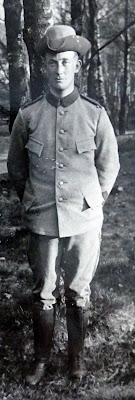
Gustaf in  uniform, 1925


Kviberg 2006 - Photo from Wikimedia Commons

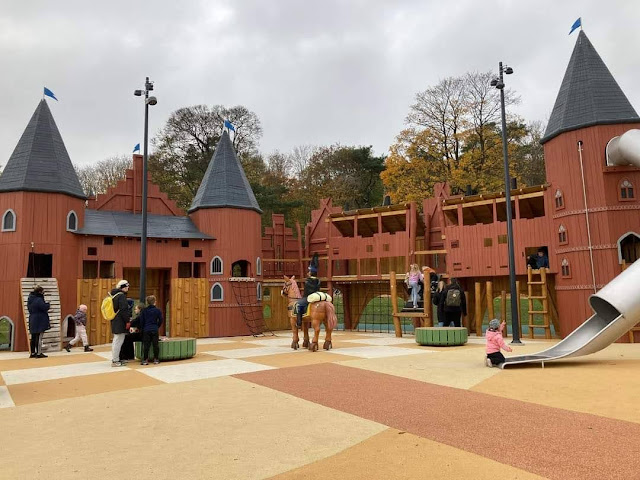
In the area today, you'll find housing, municipal offices, businesses and various association premises. Recently, a theme playground was added, inspired by the history of the place. A friend of mine visited it and posted some photos on Facebook. I asked her permission to show those here as well:
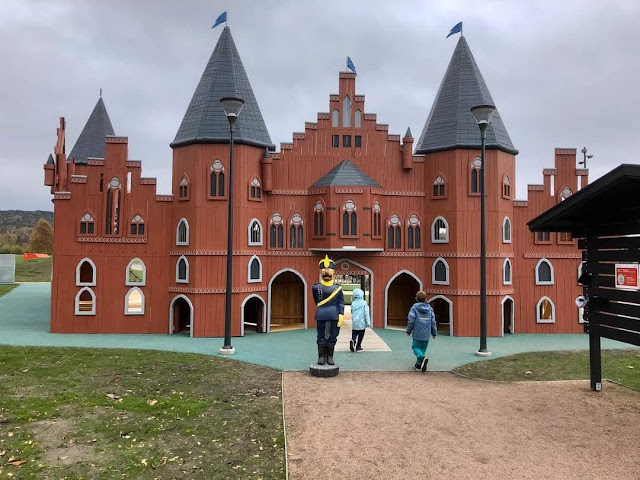
Kviberg, playground 2022 - Photo: G.C.

Kviberg, playground 2022 - Photo: G.C.

Kviberg, playground 2022 - Photos: G.C.

For my grandfather Gustaf in 1925, Kviberg seems to have been rather the opposite of an "amusement park", though. While I do not have any letters written by himself from his time there, I do have some written to him by Sally (my grandmother) and her brother Nils, which also reflect a bit of what Gustaf in turn wrote back to them.

In earlier posts I have shared my deduction that Nils and Gustaf were friends since childhood, having grown up in the same village. In 1925, Gustaf and Sally were also still just "friends". (She was four years older, and if deeper feelings had begun to develop, at least they were not yet pronounced). 

The first letter (following below) is from Nils, with a short PS from Sally added at the end; and obviously written not long after Gustaf had gone off to Kviberg. Nils, two years older than Gustaf, had his own military service behind him (1923, and I think in Borås).  (Correction will be added in the next post.)

Nils to the far right in the middle row.

Nils in a somewhat more elegant uniform

Military terminology is not my area of expertise (in any language!); but I hope my translation will convey the general idea, and the 'tone of voice'. (Further comments about the content, and people mentioned, will follow below the letter itself.)


Fristad, 22.3.1925

Dear Conscript 24331 Johansson  [---]

Thanks for your letter. So, you're already angry with the commanding officers. Way to go! Completely natural, and very expedient - especially if shown openly. Should make things sooo easy when you need to ask for leave of absence...

I gather from your letter that you appreciated the enlistment ceremonies. Getting a tunic that fit seems to have been particularly difficult. You know, when I read that, a poem by [our friend] Klas came to mind --- [quote referring to conscripts being given ill-fitting clothes]

Yesterday evening I went to the annual meeting of the Farmers' Association, to write a report [for the newspaper]. Then I went to visit Karl Nilsson  and he gave me a cigarillo, which I smoked. He accompanied me to the church, and asked me if I had heard from you. I said ”yes” - and then some more. After that I met Arvidsson. He asked the same question, and got the same answer.

No need to worry about T. [Gustaf's grandfather]. I was up there today, but he wasn't home. But I looked through the window, and saw that he'd made the bed, and everything seemed to be in order. When I see him, I'll pass on your greetings.

So you didn't get to be a signalist. I kind of suspected you wouldn't. Being a coachman should be better than serving the cannons, though – I think.

Not much to report from here. Life goes on as usual. Mum and Hildur  have gone to church. Kalle keeps nodding off, and Sally is snapping her fingers.  A typical peaceful Sunday. In a few minutes I'll be off to the annual meeting of  the cooperative association. Looking forward to the walk, as we're having beautiful spring weather. Tonight I'll be seeing Nilsson at the 7 o'clock train, to give him the report from the meeting. And on Wednesday we'll probably be going to visit Klas together. 

Sally wants to add a few lines, so I'll say bye for now.
Your friend, Nils

[PS written by Sally] 
Greetings to you from ”Mor Bengta”. Thanks for the greetings I was about to get in your letter to Nils. Actually, we thought it got so empty here after you left that we almost felt like shedding a few tears – well, by ”we”, I mean we three women... Welcome home for Easter!  "Bengtamora"


Comments:

"Dear Conscript 24331 Johansson" - The original letter starts with a long line of abbreviations that Nils calls a "puzzle", and asks Gustaf to work out the meaning himself. (If he can't, Nils will explain it in his next letter - which unfortunately, I don't have!) But the first few obviously refer to Gustaf's conscription number and surname. At the time, he was still using his father's surname, Johansson. (He changed to his mother's surname later.) 

Klas - Must refer to a local poet and historian, Klas Olofson, who was well known in the village where they lived. I don't think he ever reached national fame, but he was a great inspiration to Gustaf when it came to collecting stories and folklore from their own neighbourhood. Nils quotes only a few words from the poem by Klas that he's thinking of - something about the military jacket not made to fit a dromedary. Since I've never seen/heard the full poem, I confess I'm having trouble fitting the dromedary into a Swedish army context. But it obviously refers to the fact that conscripts have to make do with the clothes they're given, and can't be fussy.
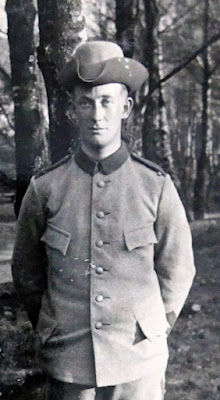
The uniform jacket referred to??


Karl Nilsson - Another friend and mentor to my grandfather, working at the small newspaper in town, where Gustaf started out as a journalist. From this letter it seems that Nils also contributed freelance reports to the paper sometimes. Or maybe he was just helping out with that while Gustaf was away. (From what I know, after Nils got married and moved away from the farm, he worked as a bus driver and taxi driver. His oldest son became a journalist though.)

T. - Gustaf's grandfather, 70 years old in 1925, and a widower since 1922, was now living alone in the small 'croft' cottage on the grounds of a neighbouring farm. I have got the impression that he was also a periodic alcoholic. Whatever the main reason, Gustaf was obviously worried about him, and had asked his friends to keep an eye on him. 

Kalle (Carl) was Sally's and Nils' oldest half-brother (by their father); running the farm where they lived, and 55 years old in 1925. (As far as I know he never married. He died in 1928.) Hildur was Sally's and Nils' older half-sister by their mother. - 33 years old and still single in 1925. 

"Sally is snapping her fingers" - I don't know if this was a habit of hers; or if she was just impatient to take over the pen from Nils and add her PS to the letter!

"Mor Bengta" or "Bengtamora" =”Mother Bengta”. This seems to have been a private joke between Gustaf and Sally – a nickname he had given her, perhaps? The name Bengta doesn't ring a bell with me, so I don't know what or who it might refer to (a real person, or a fictional character). Sally does not seem to mind the nickname though, because she keeps signing herself so in a few more letters to come. (Perhaps she was acting "motherly" towards Gustaf sometimes?)

- - -


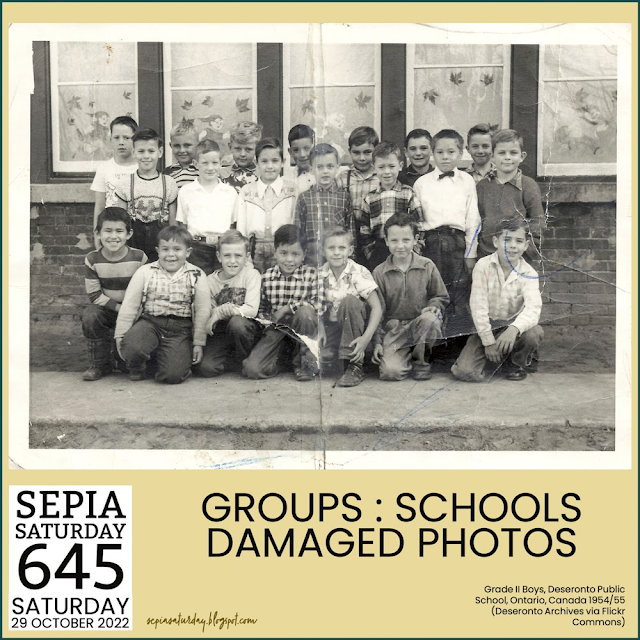
(going with "groups" and "damaged photos")


SVENSKA

Brev från Nils (med PS av Sally); till Gustaf (på Kviberg) 

Fristad d. 22/3 1925

K. dr. vpl. 24331 J-n o. k. G. a. A2 K. G. ä. f. på 3. b. o. i. e. s-n. f. s.
Detta är en rebus. Kan du lösa den, så sänd mig lösningen i nästa brev! Varom icke, skall du sedan få reda på, vad den betyder.

Tack för brevet. Jaså, du har redan blivit lömsk på befälet. Rätt så, rätt så. Det är fullkomligt naturligt, och synnerligen ändamålsenligt att tillämpa i praktiken. Åtminstone visa det öppet. Det går så lätt att få permission se'n så –

Av ditt brev ser jag, att du tyckte stunden, då du fick ”lump”, var synnerligen högtidlig. Särskilt svårt var det visst att få en passande kollett. *
*livrock utan skört l. med korta sådana; sedan länge bl. mil.; numera bl. om dylikt plagg (med korta skört o. ståndkrage) tillhörande den dagliga dräkten vid artilleriet o. fortifikationen samt (för officerare o. underofficerare) vid vissa kavalleriregementen [SAOB]
Vet du,när jag läste det kom jag att tänka på Klas' ”Beväringens exercis”: ” --- Kronans helga jacka syddes --- ingalunda åt en dromedar” etc.

Igår kväll var jag och refererade Bondeförbundets årsmöte. Sedan var jag hos Karl Nilsson och fick en cigarr-cigarett. Jag rökade den. Nilsson följde mig till kyrkan och frågade om jag hört något från dig. ”Ja”, sa' ja'. Och sedan lite mer. Sedan träffade jag Arvidsson. Han frågade detsamma och fick samma svar.

Tulin skall du icke oroa dig för. Jag var däruppe i dag på fm, men träffade honom ej hemma. Såg genom fönstret, att sängen var uppbäddad och allt i ordning. När jag träffar honom skall han få hälsningar från dig. 

Du blev ej signalist. Jag nästan anade det. Men kusk är i alla fall bättre än vara med bland kanonservisen. Tror jag.

Härifrån är icke mycket att berätta. Allt går sin gilla gång, och mamma och Hildur hava gått till kyrkan. Kalle sover mellan han är vaken och Sally knäpper med fingrarna. Allt är söndagsfrid. Om några minuter skall jag gå till koop. fören. årsmöte.  Det skall bli härligt med en promenad, alldenstund vädret [är] vårgrannt. 

Ikväll skall jag träffa Nilsson vid 7-tåget. Han skall ha referatet från koop. mötet. På onsdag skall vi visst gå till Klas. Om det blir av.

Sally vill skriva några rader, därför ”Hej!” till nästa gång. 
Vännen Nils

PS (skrivet av Sally)
Hälsningar till dig från ”Mor Bengta”. Tack skall du ha för hälsningarna jag höll på att få i Nils' brev. Vet du, det blev så tomt efter dig här sedan du rest, tyckte vi, så det var nära vi togo till ”lipen” lite var – ja, jag menar vi tre fruntimmer. 
Välkommen hem till Påsk! D.S. ”Bengtamora”

Kommentarer:

Göta artilleriregemente (A 2) flyttade in på Kviberg 1895; och där gjorde min farfar Gustaf sin värnplikt år 1925 (21 år gammal). 

På platsen idag finns "kommunal förvaltning, bostäder, småföretag, föreningslokaler och annan verksamhet".  2022 invigdes också en tema-lekplats, vars utformning inspirerats av platsen historia. En vän till mig besökte denna nyligen, och har gett mig tillåtelse att använda hennes foton här.

För min farfar, 1925, tedde sig Kviberg dock knappast som någon ”nöjespark”, vilket framgår av brevet ovan, skrivet av hans vän Nils (bror till min farmor Sally, som också skrivit ett PS på slutet). (Sally och Gustaf var vid den här tidpunkten än så länge bara vänner.)

Nils var två år äldre än Gustaf och hade sin värnplikt avklarad (1923).

”Detta är en rebus” osv. Tyvärr har jag inte vare sig Gustafs svarsbrev eller Nils' nästa skrivelse, och det enda jag känner mig säker på är att ”vpl. 24331 J-n” måste stå för ”värnpliktige 24331 Johansson”, samt att A2 var artilleriregimentet på Kviberg. Gustaf använde vid den här tiden fortfarande sin fars efternamn, Johansson. Han bytte senare till moderns och morföräldrarnas efternamn, Thulin.

Klas – Klas Olofsson, en lokalt välkänd poet och historiker, författare till samlingsverket ”Folkliv och folkminne” (1928 + 1931). Jag tror inte han nådde nationell berömmelse men han var en stor inspirationskälla för min farfar Gustaf när det gällde att samla historier och sägner från trakten där de bodde. Klas' dikter har jag inte, och har aldrig läst.

Karl Nilsson – Också en vän och mentor till Gustaf. Han arbetade på tidningen Borås Nyheter, där Gustaf också började sin bana som journalist. 

Av detta brev framgår att även Nils ibland tydligen skrev notiser för tidningen (t.ex. från lokala årsmöten). Men kanske var detta bara tillfälligt, som ersättare för Gustaf? Vad jag vet, så arbetade Nils (efter sitt giftermål) som busschaufför och taxiförare. Hans äldste son blev dock journalist till yrket.

Tulin (Thulin) var Gustafs morfar. 1925 var han 70 år,  änkling sedan tre år, och bodde nu tydligen ensam i torpet (som löd under en granngård till Storegården). Jag har av andra anteckningar fått intrycket att han var periodisk alkoholist. Vad än huvudorsaken var, så oroade sig Gustaf tydligen för hur han klarade sig, och hade bett sina vänner på Storegården att hålla ett öga på honom.

Kalle (Carl) var Sallys och Nils äldre halvbror (från fadern Samuels första äktenskap). Han tog över skötseln av gården redan några år innan faderns död 1907. Så vitt jag vet gifte han sig aldrig. Han dog 1928. Hildur var Sallys och Nils äldre halvsyster från deras mors sida. 1925 var hon 33 år och fortfarande ogift hemmadotter. (Sally, Nils och Hildur gifte sig alla samma år - 1930.)

”Sally knäpper med fingrarna” - Jag vet inte om detta var en vana hon hade, eller om hon bara just då var otålig att få ta över pennan, och lägga till sitt PS till brevet!

"Mor Bengta" / "Bengtamora" – Detta verkar vara ett privat skämt mellan Gustaf och Sally – ett smeknamn han gett henne, kanske? Namnet Bengta säger mig ingenting, så jag vet inte vad eller vem det syftar på. Sally tycks dock inte ha något emot det, för hon fortsätter att använda det även i kommande brev till Gustaf under 1925. Kanske uppträdde hon ”moderligt” mot honom ibland? (Hon var fyra år äldre, och när de var yngre måste åldersskillanden ha känts större.)


2022-09-25

Old Friends - Sepia Saturday 640

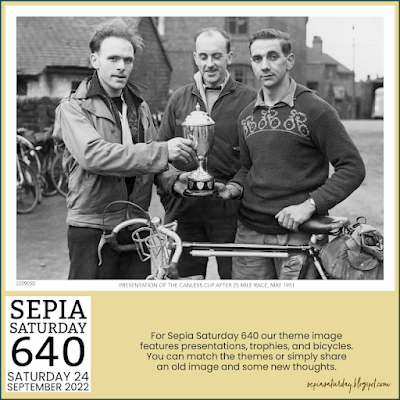
Looking for photos of "three men" for Sepia Saturday 640, this one came to mind for me.

Med Nils och Gustaf, omkring 1922
With Nils and Gustaf, around 1922

It's in an album put together for my paternal grandfather Gustaf, for his 50th birthday in 1954. The album itself seems to have been a gift from 'the Swedish League of Journalists' (he was a journalist), but the photos were probably put in by my grandmother Sally (or else by Gustaf himself). The three young men in the photo are my grandfather (born 1904), my grandmother's brother Nils (born 1902), and another Gustaf (surname and age unknown to me). 

In the same album, I also found two out of the three childhood photos of my grandfather which I think are all that exist, and from which I have drawn the conclusion that he must have been friends with my grandmother's younger brother ever since their childhood. With his future wife Sally being four years older than him, it won't have been until he was grown up that romantic feelings developed between them. He also came from poorer circumstances than she did. Anyway, they did not get engaged until  she was 29, and he had turned 25. And got married a year later, in 1930.

I've probably shared these photos before, maybe even for Sepia Saturday, but I think it may be time to bring them together in one post and introduce my grandfather a bit more.

Den grå stugan - barndomshemmet
The grey cottage - the childhood home

This is  the small 'croft' cottage where my grandfather Gustaf lived with his grandparents, and to begin with also his mother and uncle. The grandfather, Alfred Thulin, was a (part-time) soldier and a stone mason. His wife's name was Rebecca. Gustaf's mother (Gerda)* and uncle both suffered from mental illness. Both moved to a mental hospital some time in Gustaf's childhood or youth, and ended up living the rest of their lives there. Gustaf, born 'out of wedlock', was chiefly raised by his grandparents. I have never seen any photo of neither his mother nor his grandparents.

 *(Sorry about any confusion that may arise from several different people in my family history being named Gustaf and Gerda... Very common names back then!)

Gustaf's father was a farmer, or son of a farmer. I think his mother Gerda was working for him/them when she got pregnant. I have very few facts, but he did not marry Gerda but another woman, probably considered more suited to be a farmer's wife. But it seems he did acknowledge that he was the father of Gerda's child, as the boy was named after him. I have my grandfather's old school book (printed in 1910), and the name written on the inside of the cover is "Gustav Johansson". Later in life, he chose to take his mother's surname (Thulin) instead (and also changed the spelling of his first name, it seems). 


Storegården 1907 - The 'Big Farm' 1907

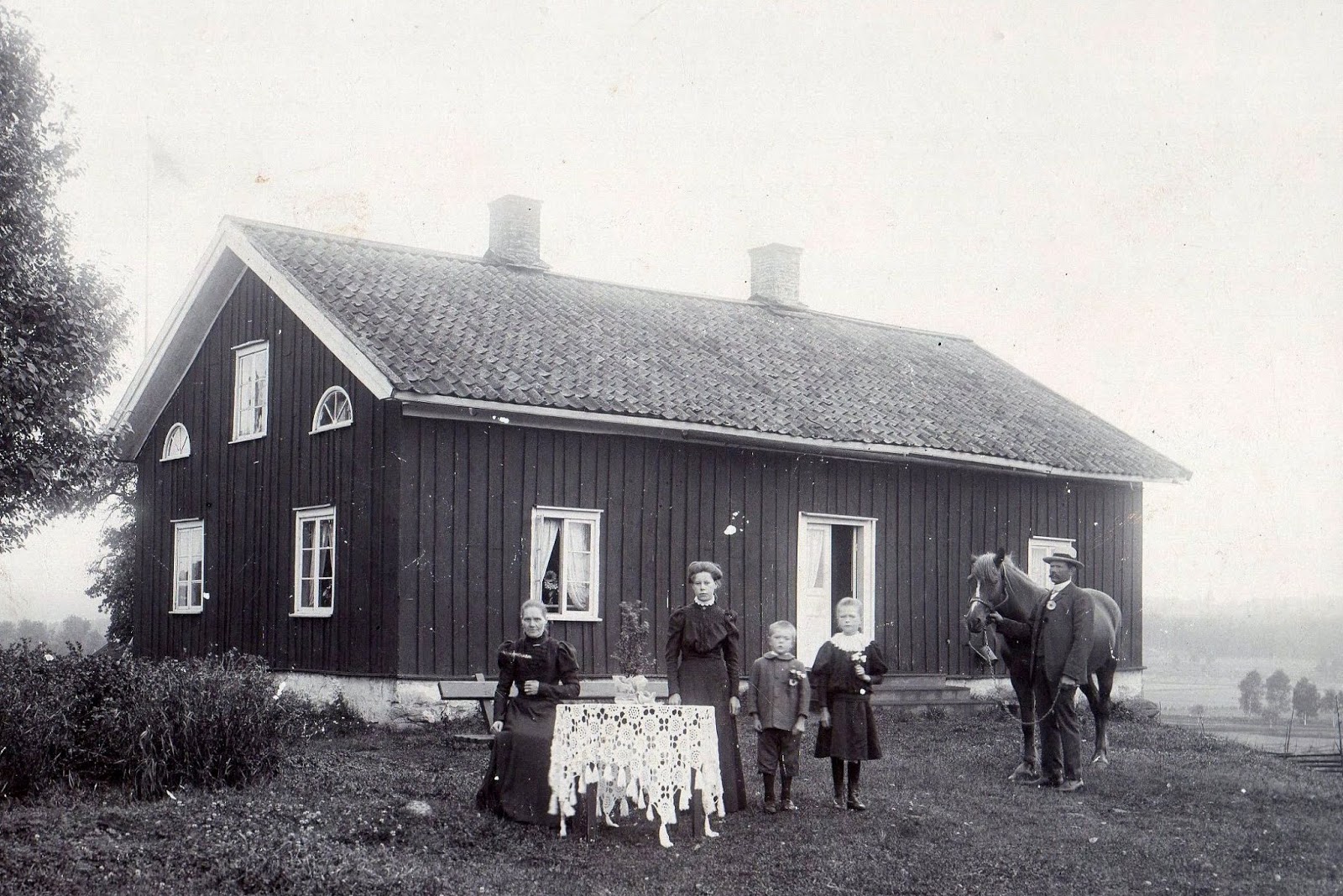
Meanwhile, this is the farm (Storegården = Big Farm) in the same village/neighbourhood where my grandmother Sally grew up. When I first found this photo (not in an album but mounted on cardboard to be hung on a wall), I had no idea who the people were (or where it was from); but later understood that it must be from shortly after the death of my grandmother's father Samuel in 1907. Sitting at the table, the widow: my grandmother's mother Selma. The young woman is her daughter from her first marriage, Hildur; and the children are the children from her marriage to Samuel: Sally (7) and Nils (5). The man with the horse is Samuel's oldest son from his first marriage, Carl, who took over the farm. And together they're the family that remained living together at the farm until 1930, when Sally, Nils and Hildur all got married within a couple of months. (Carl died in 1928, but by then his younger brother Gustaf  - known by readers of this blog as avid postcard collector - was back to take over the farm.) 

Två kamrater - Two comrades

In one of Sally's albums, there is this photo of her brother Nils (right) together with a smaller boy. The text underneath just says Two comrades (friends). I don't know what the occasion might be - start or end of a school year, perhaps? Maybe someone took them shopping for new clothes, and decided it was worth celebrating with a visit to the photographer's as well?

Nils is easy enough to recognise just from family resemblance. However, it took me a long time, and comparison with some other photos, to realise that the smaller boy by his side must be my grandfather Gustaf. It had never really occurred to me (until I started thinking about it) that they had known each other since such a young age. While there was a 4+ years age difference between Sally and Gustaf, there was only 2 years between Nils and Gustaf. Living in the same rural village, not only would they have gone to the same small school - but also attended Sunday school together, and played football together... Shown by two more photos in the album that Gustaf got for his 50th birthday:

I söndagsskolan 1912 - In Sunday School 1912


I recognise Nils as No 2 from the right - and  feel pretty sure now that my grandfather is No 1 on the left, in the sailor's outfit. (Also note that they're wearing the same the caps as in the photo of just the two of them above. If not required, at least obviously the fashion at that time!)

I Längjums fotbollslag - In [the village] football team

Again, I have no problem recognising Nils as the tall young man at the back (probably captain of the team!) And what conviced me that the boy in front of him must be my grandfather is his "stance" - compared to that grown-up photo at the top from 1922! ;-)


I'll write a bit more about my grandfather's life some other time.

For 'contemporary' photos of the Farm vs the small cottage where my grandparents grew up, see an old post from 2012, Storegården och Johannelund. That post is in Swedish but with a summary in English at the bottom.


 Linking to Sepia Saturday 640


Veckans inspirationsbild för Sepia Saturday visar tre män. Det ledde mina tankar till ett foto från ca 1922 av min farfar Gustaf (18) tillsammans med två andra unga män - min farmors yngre bror Nils (20), och ännu en (för mig okänd) Gustaf - i ett fotoalbum som min farfar Gustaf fick på sin 50-årsdag 1954. Själva albumet är en gåva från 'Boråssektionen av S.J.F./Styrelsen'. (Gustaf var journalist, och jag tror S.J.F står för Svenska Journalistförbundet). Fotona lär dock ha satts in antingen av min farmor Sally, eller av Gustaf själv.

I samma album finns också två av de tre barndomsfoton av min farfar, som jag tror är alla som existerar. (Det tredje sitter i ett av min farmors album.) På alla tre är både farfar och Nils med. Av det har jag dragit slutsaten att de måste ha varit vänner ända sen barndomen. Medan Sally var fyra år äldre än Gustaf så skilde det bara två år mellan honom och Nils. Romantik mellan Gustaf och Sally lär knappast ha uppstått innan han så att säga ”vuxit ikapp” henne. Han kom dessutom från fattigare omständigheter än vad hon gjorde. De förlovade sig först när han var 25, och hon 29. (Och gifte sig ett år senare, 1930.) Men att han varit vän till Nils ända sedan barndomen förklarar hur han kom att umgås med familjen långt tidigare.

Jag har delat de här fotona förut i olika sammanhang, även för Sepia Saturday, men tänker att det är på tiden att jag för samman dem i ett och samma inlägg här och introducerar min farfar lite närmare.

Den grå stugan – barndomshemmet

Detta är torpet där Gustaf bodde tillsammans med sina morföräldrar, och till en början (antar jag) även sin mor och morbor. Morfadern, Alfred Thulin, var soldat och stenhuggare. Mormodern hette Rebecka. Gustafs mor Gerda (*) och hennes bror Hjalmar led båda av psykisk ohälsa, och båda flyttade under Gustafs uppväxt till Restads mentalsjukhus i Vänersborg, där de blev kvar resten av sina liv. Gustaf var född 'utom äktenskapet', och uppfostrades av sina morföräldrar. (Mormor Rebecka dog när han var 18.) Jag har aldrig sett något foto av vare sig morföräldrarna eller modern. (Det fanns troligen aldrig några.)
*Beklagar eventuell förvirring som kan uppstå pga  att namnen Gerda och Gustaf är så vanligt förekommande i min släkthistoria! (Två av farmors halvsyskon, som jag skrivit mest om på den här bloggen, hette ju också Gerda och Gustaf...)

Gustafs far var en jordbrukare i trakten – eller son till en. Jag tror att Gerda arbetade som piga på gården när hon blev gravid. Jag vet inte mycket om det, men från vad min pappa berättade vid något tillfälle på äldre dar, så gifte mannen sig med en annan kvinna, som antagligen ansågs mer lämpad för honom som hustru och bondmora. Det verkar dock som att han erkänt sig som far till Gustaf, eftersom pojken fick hans efternamn. Jag har kvar min farfars gamla skolbok (tryckt 1910), och på insidan av pärmen står namnet ”Gustav Johansson” präntat för hand. Senare i livet valde Gustaf att ta sin mors efternamn (Thulin) istället – och ändrade tydligen också stavningen av förnamet. Jag tror att han under en period använde dubbelnamnet Johansson-Thulin, men kallade sig enbart Thulin från och med giftermålet med Sally, som också antog det namnet.

Storegården 1907

Medan Gustaf växte upp på torpet Johannelund, som lydde under en annan gård (Ledsgården), så bodde Sally och Nils på Storegården, i samma by. Det var väl inte en jättestor gård, men det var säkert ändå en betydande klasskillnad mellan gård och torp. 

Det tidigaste fotot på Storegården som jag har sitter inte i något album, utan är monterat på en pappram, för upphängning på väggen. När jag först hittade det hade jag ingen aning om vare sig vilka personerna var, eller huset. (På senare bilder av Storegården i albumen var huset vitmålat.) När jag börjat sätta mig in  i historien lite mer förstod jag dock att fotot måste vara taget inte långt efter farmors far Samuels död, 1907. 

Till höger om bordet sitter änkan: min farmors mor Selma. Den unga kvinnan på andra sidan bordet är hennes dotter från första äktenskapet, Hildur; och de två yngre barnen hennes barn från äktenskapet med Samuel: Nils (5) och Sally (7). Mannen med hästen är Samuels äldste son från hans första äktenskap, Carl, som tog över driften av gården redan några år före faderns död. Tillsammans utgör de den familj som fortsatte att leva tillsammans på Storegården fram till 1930, då Sally, Nils och Hildur alla tre gifte sig inom loppet av några månader. (Carl dog 1928, men vid det laget hade hans yngre bror Gustaf – känd av trogna läsare av den här bloggen som vykortssamlare – återvänt, och han var den som tog över gården efter brodern.)

Två kamrater

I ett av Sallys album sitter det här fotot av Nils (till höger) tillsammans med en mindre pojke. Noteringen under bilden namnger ingen av dem utan säger bara ”Två kamrater”. Nils är dock lätt att känna igen pga typiska familjedrag. Vem den andre pojken kunde vara hade jag länge ingen uppfattning om. Anledningen till besöket hos fotografen kan man också fundera över: Skolstart eller skolavslutning verkar troligt. Kanske hade någon tagit med båda pojkarna för att köpa nya kläder, och det blev anledning till att fira med ett besök hos fotografen också?

Nils är som sagt lätt att känna igen, men det tog tid innan det gick upp för mig att den andre pojken antagligen är min farfar Gustaf. Jag hade aldrig tänkt på dem som barndomskamrater. Men efter att ha insett att de bodde i samma by, och bara två år skilde dem åt i ålder, så insåg jag att de också måste ha gått i samma skola (som säkert inte var stor nog att skilja alla årsklasser åt). Dessutom hittade jag i farfars album bevis på att de gått i söndagsskola tillsammans, och spelat i samma fotbollslag i byn.

I söndagsskolan 1912

Här (på den förstorade bilden) känner jag igen Nils som nr 2 från höger – och är vid det här laget rätt säker på att Gustaf är nr 1 från vänster, i sjömanskostym. Jag noterar också att de bär samma skärmmössor som på studiofotot av bara de två. (Om mössorna inte tillhörde obligatorisk skolklädsel tycks de åtminstone ha varit högsta mode just då!)

I Längjums fotbollslag

Återigen är Nils lätt igenkännbar – nu ännu mer på grund av sin längd! (Jag har också minnen av honom från min egen barndom.) Och vad som slutligt övertygade mig om att pojken framför honom måste vara Gustaf, var en jämförelse med fotot från 1922, och hans ”kroppshållning” på båda de bilderna!

Jag lär återvända till att skriva lite mer om min farfar vid något senare tillfälle.

'Nutida' foton från Storegården och torpet Johannelund kan ses i ett gammalt inlägg från 2012: Storegården och Johannelund

2014-01-25

Sepia Saturday: Snow

snow_0002-001

This photo is from my grandmother Sally’s photo album.
I don’t know who the people are, but I don’t think I’ve ever seen that kind of man-drawn sled anywhere else!

snow_0001-001

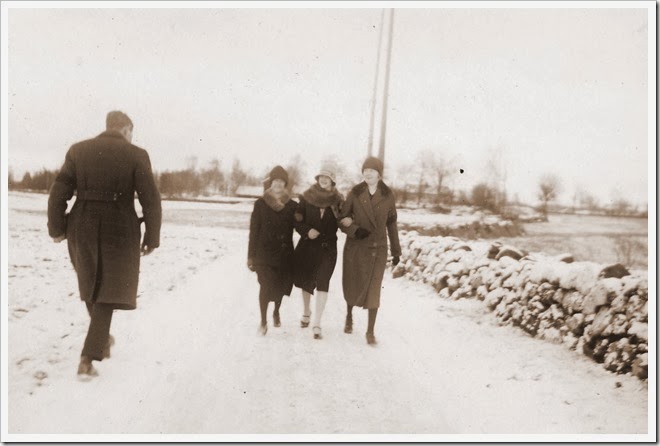
This is from grandma Sally’s photo album, too. I recognise Sally on the right in the trio, and I’m pretty sure it’s her half-sister Hildur on the left, but I don’t know who the girl in the middle is. The man walking towards them could be Sally’s brother Nils, there’s something slightly familiar about the shape of him. My guess is the photo is from the late 1920s. The road is probably in the neighbourhood of the family farm where they lived until 1930.

snow-001

Here we have Nils to the right; I don’t know who the man on the left is. The photo is from my grandfather Gustaf’s album and he dates it to 1923, when both he and Nils were in military service.

Gerdas 29.1 Oakhill Feb 1921-002

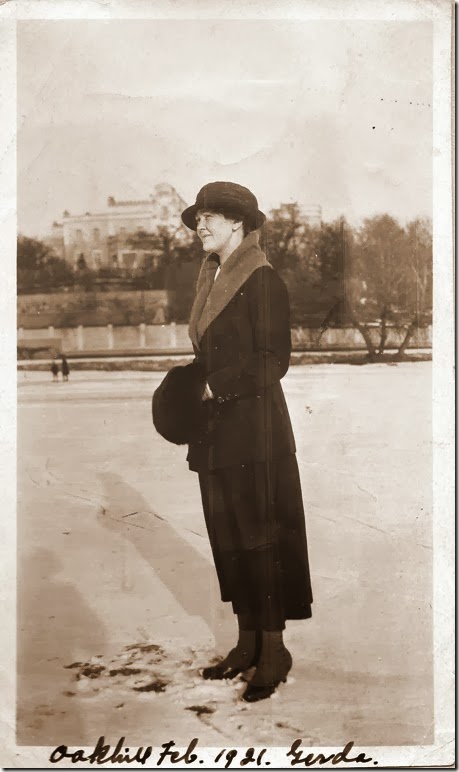
The last two photos are from Gerda’s album (my grandmother’s older half-sister). The photo above is one of the few in her album that has any place and/or date attached. I don’t know which Oakhill, though (does anyone recognise the building in the background?) or what exactly she was doing there.  Correction (26.1.2014): I just found the answer in an email from last year from my relative Bengt who has been filling in some details in Gerda’s history for me. This Oakhill is not in the United States at all (as I assumed, knowing that Gerda travelled a lot) but in Stockholm, Sweden! It was built in 1910 for Prince Wilhelm and his wife Maria Pavlovna. However, they got divorced in 1914 (big scandal), so who lived there in 1921, I don’t know. Since 1926 it’s been the Italian Embassy in Sweden. (There’s no end to the things one learns by blogging!) But according to my relative, there is a document with illegible signature among Gerda’s papers, indicating that she did work for someone at Oakhill in Stockholm in 1921.

Browsing through her album again today, looking for more winter pictures, I also found this one, which had pretty much escaped my notice before:

snow_0003-001

There is no note of time or place attached to this one – but I now feel pretty confident that it’s from the Manville estate in Pleasantville, New York, in the early 1930s. The link will take you to a previous post of mine from September 2012, where I discuss the possibility of that stone wall belonging to that estate – and why.

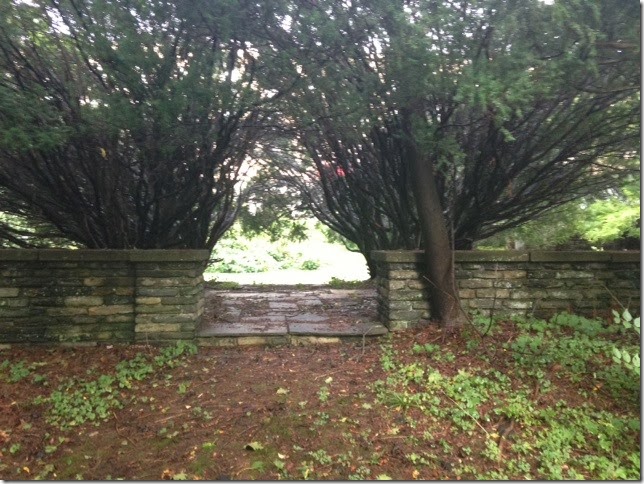
Moreover: Between that post and this one, in September 2013, I received an unexpected email from a Swedish woman now living in Pleasantville, who came across my blog post when she was trying to find out something about the history of this very estate. (How extraordinary is that?!) She was able to confirm that while the house itself is no longer there, the stone wall surrounding the property still is:

image (2)

I’ve been meaning to do a separate blog post about Sofia’s  email and photos, but as I have been taking a bit of a break from the family history research lately, I haven’t got round to it. Finding yet another photo including the wall today reminded me! I’ll get back to it, I promise. For now I just include one of her pictures, for comparison. There is no doubt in my mind now that it is the same wall.

Linking to: